
Chicken tenders are one of those foods almost everyone loves, from kids to people who swear they don’t like “healthy” food. The restaurant version is deep-fried, though, and a combo with fries and dipping sauces can easily pass 1,000 calories. These air fryer chicken tenders keep everything people love about them, the golden crunchy coating and the juicy inside, with about 44 grams of protein and around 335 calories per serving.
Crispy tenders or plain breast? These tenders are breaded and extra crispy, made for dipping sauces and game night. For a lighter, unbreaded chicken breast to slice over salads, bowls and meal prep, see my juicy air fryer chicken breast.
Below you’ll find my coating trick for maximum crunch, why crispy food is so satisfying (there’s real research on this), a few science-backed tips to feel full with fewer calories, and five dipping sauces made with Greek yogurt.
| Protein | Calories | Time | Protein Score |
|---|---|---|---|
| 44 g per serving | About 335 kcal | 25 min | A (13.1 g per 100 kcal) |
Why these tenders are so high in protein
Chicken tenderloins are the small, lean strips attached to the underside of the breast. Like breast meat, they have about 22–23 g of protein per 100 g raw and very little fat [1]. The coating adds a few more grams: Parmesan cheese and egg both bring protein, so even the crust works for you.
Compare that with a typical fast-food portion. Deep-fried tenders soak up oil in the fryer, so a big part of their calories comes from fat. Cooking them in the air fryer with just a light spray of oil keeps the crunch but cuts most of that extra fat.
Protein is the most filling of the three macronutrients, and higher-protein meals tend to increase fullness in controlled studies [2]. It also has the highest thermic effect: your body uses roughly 20–30% of the calories from protein just to digest and process it, compared with about 5–10% for carbohydrates and 0–3% for fat [3]. It’s not a magic trick for weight loss, but it’s one more reason protein-rich meals are a smart choice.
Why crispy food is so satisfying
Here’s a fun fact: how crispy food tastes depends partly on how it sounds. In a well-known experiment, researchers changed the sound people heard while biting into potato chips through headphones. When the crunching sound was made louder and sharper, people rated the same chips as crisper and fresher [4]. The study even won an Ig Nobel Prize.
That’s why a crunchy coating makes chicken feel so much more indulgent than plain grilled chicken, even when the calories are similar. Getting the crust right is not a small detail; it’s what makes these tenders feel like a treat.
The secret to a crunchy coating
- Use panko, not regular breadcrumbs. Panko flakes are larger and airier, so they stay crunchy instead of turning into a dense crust.
- Toast the panko first. Stir it in a dry skillet for 2–3 minutes until light golden. Air fryers don’t brown dry crumbs as much as oil does, and pre-toasting gives you that deep golden color.
- Add Parmesan. It adds flavor, extra protein and helps the coating brown.
- Use egg and mustard as glue. A beaten egg with a spoonful of Dijon mustard holds the crumbs in place and seasons the chicken at the same time.
- Press the crumbs on. Pat the coating firmly onto each tender so it doesn’t fall off when you flip them.
- Spray, don’t pour. A light spray of oil on both sides is enough to make the panko crisp.
Air fryer chicken tenders recipe
This makes 4 servings, about 3–4 tenders each. The recipe card lets you change the servings and switch between US and metric units.
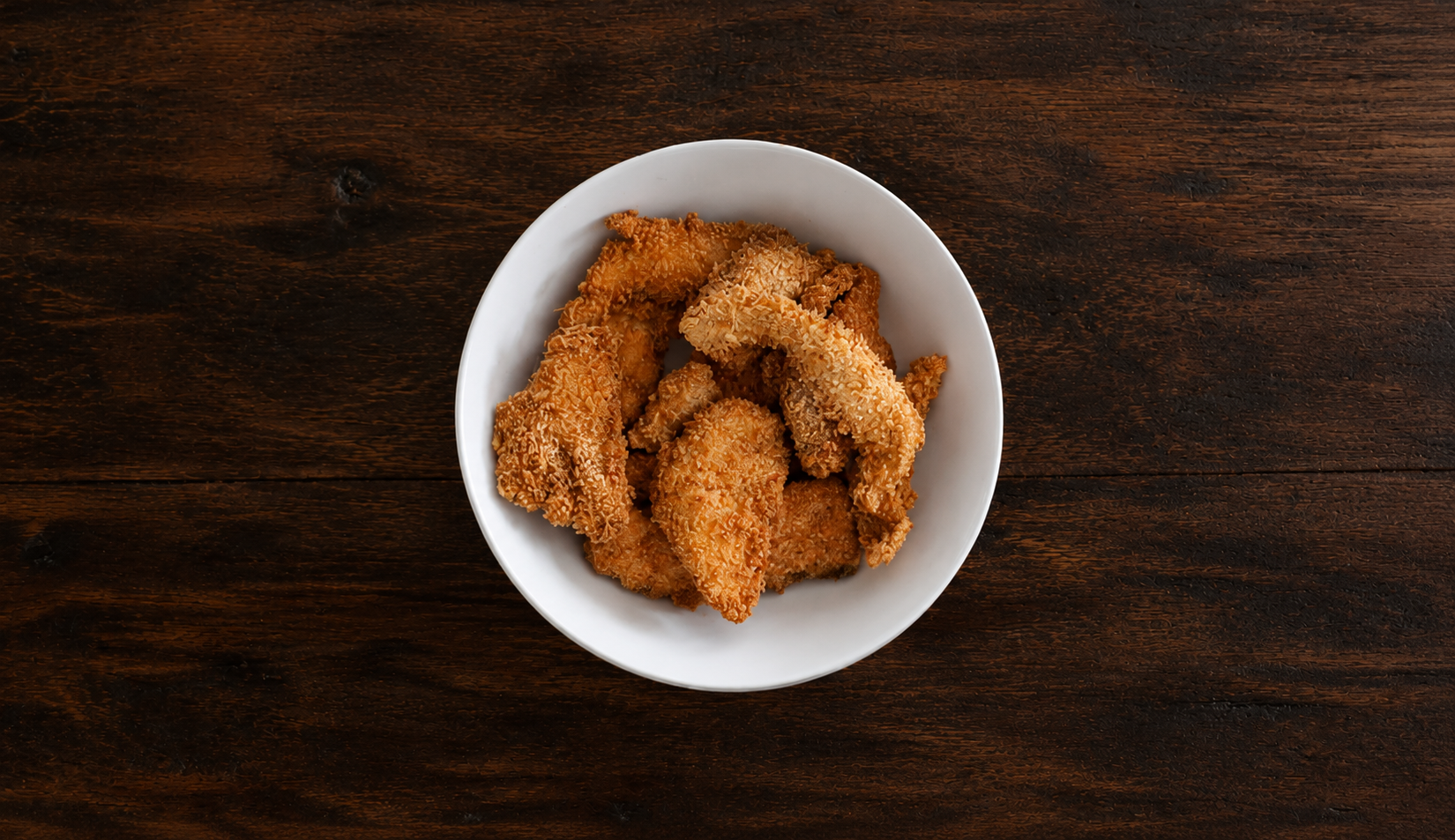
Air Fryer Chicken Tenders
Ingredients
Method
- Toast the panko in a dry skillet over medium heat for 2–3 minutes, stirring, until light golden. Let it cool, then mix it in a shallow bowl with the Parmesan, smoked paprika, garlic powder, salt and pepper.
- In a second shallow bowl, whisk the egg with the Dijon mustard.
- Pat the chicken dry. Dip each tender in the egg mixture, let the excess drip off, then press it firmly into the panko mixture on both sides.
- Preheat the air fryer to 400°F (200°C). Arrange the tenders in a single layer without touching and spray both sides lightly with oil.
- Air fry for 10–12 minutes, flipping halfway, until golden and the thickest piece reaches 165°F (74°C). Cook in batches if needed.
- Let them rest for 2 minutes and serve with your favorite Greek yogurt dipping sauce.
Notes
No air fryer? Bake them
Place a wire rack on a baking sheet, spray it with oil and arrange the coated tenders on top so air can circulate underneath. Bake at 425°F (220°C) for 15–18 minutes, flipping halfway, until golden and the thickest piece reaches 165°F (74°C). The rack is the key: without it, the bottom of the tenders gets soggy.
5 Greek yogurt dipping sauces
Store-bought dips like ranch and honey mustard can add 100–150 calories per serving without you noticing. These versions use plain Greek yogurt as the base, so they’re lighter and add a little extra protein. Each amount makes enough for 2 servings.
| Sauce | Mix together | Per 2 tbsp |
|---|---|---|
| Honey mustard | ¼ cup Greek yogurt, 1 tbsp Dijon mustard, 2 tsp honey | About 35 kcal, 3 g protein |
| Buffalo ranch | ¼ cup Greek yogurt, 1 tbsp hot sauce, pinch of garlic powder, dried dill | About 20 kcal, 3 g protein |
| Smoky BBQ | 2 tbsp Greek yogurt, 2 tbsp BBQ sauce, pinch of smoked paprika | About 40 kcal, 2 g protein |
| Sriracha lime | ¼ cup Greek yogurt, 1–2 tsp sriracha, juice of ½ lime | About 20 kcal, 3 g protein |
| Garlic herb | ¼ cup Greek yogurt, 1 small grated garlic clove, chopped parsley, lemon juice, salt | About 20 kcal, 3 g protein |
Science-backed tips to feel full with fewer calories
Small changes in how you eat can make a real difference in how satisfied you feel. These tips are based on research, not on diet trends:
- Eat a little slower. In a study with healthy women, eating the same meal slowly led to lower calorie intake and more fullness than eating it quickly [5]. Putting your fork down between bites or chatting during dinner helps.
- Be careful with a big sauce buffet. Our appetite for one specific flavor drops as we eat it, but a new flavor can bring appetite back. Scientists call this “sensory-specific satiety” [6]. Serving five different sauces at once makes it easy to keep eating, so pick one or two per meal.
- Fill half the plate with vegetables. Vegetables add volume and fiber for very few calories, which helps you feel full. Roasted broccoli, a crunchy salad or air fryer green beans all go well with tenders.
- Start with the protein. Eating the tenders first, before the fries or bread, means the most filling part of the meal goes in while you’re hungriest.
What to serve with chicken tenders
| Side | Why it works | Per serving |
|---|---|---|
| Air fryer sweet potato fries | Crispy and slightly sweet, more fiber than regular fries | About 130 kcal |
| Crunchy coleslaw with yogurt dressing | Fresh and cool next to hot, crispy chicken | About 60 kcal |
| Roasted broccoli | High volume, lots of fiber, ready in the oven at the same time | About 50 kcal |
| Corn on the cob | Classic American side, naturally sweet | About 90 kcal |
Tenders are also great the next day in wraps and salads. For more ideas to cook once and eat all week, see my high-protein meal prep plan.
Meal prep, storage and reheating
- Fridge: cool the tenders and store them in an airtight container for up to 3–4 days [7].
- Freezer: freeze cooked tenders in a single layer, then move them to a bag. They keep their best quality for about 2–3 months.
- Reheat in the air fryer, not the microwave: 4–5 minutes at 375°F (190°C) brings the crunch back. Make sure they’re hot all the way through (165°F / 74°C) [7].
- Freeze them uncooked: you can also coat the tenders, freeze them on a tray and air fry them straight from frozen, adding 3–4 minutes.
Common mistakes to avoid
- Crowding the basket. Tenders that touch steam each other and lose their crunch. Cook in batches if needed.
- Skipping the oil spray. Dry panko stays pale and dusty. A light spray makes all the difference.
- Overcooking. Tenderloins are thin and cook fast. Check at 9–10 minutes with a thermometer.
- Washing raw chicken. It doesn’t remove bacteria and can splash them around your sink. Food safety experts recommend cooking it to 165°F instead [8].
Frequently asked questions
How long do you cook chicken tenders in the air fryer?
About 10–12 minutes at 400°F (200°C), flipping halfway, until golden and the inside reaches 165°F (74°C).
Can I use chicken breast instead of tenderloins?
Yes. Cut the breasts into strips about 1 inch (2.5 cm) wide and ½ inch thick. They cook in about the same time. For whole fillets, see my air fryer chicken breast.
How do I keep the breading from falling off?
Pat the chicken dry before coating, press the panko on firmly, and let the coated tenders rest for 5 minutes before cooking. Flip them gently with tongs.
Are air fryer chicken tenders healthy?
They’re a lean, high-protein meal with far less fat than deep-fried tenders. Pair them with vegetables and a yogurt-based dip to keep the whole plate balanced.
Can I make them gluten-free?
Yes. Use gluten-free panko or crushed gluten-free cornflakes, and check that your mustard and spices are gluten-free.
Sources
- USDA Agricultural Research Service. FoodData Central. fdc.nal.usda.gov
- Paddon-Jones D, Westman E, Mattes RD, Wolfe RR, Astrup A, Westerterp-Plantenga M. Protein, weight management, and satiety. Am J Clin Nutr. 2008;87(5):1558S–1561S. AJCN
- Westerterp KR. Diet induced thermogenesis. Nutr Metab (Lond). 2004;1(1):5. PubMed
- Zampini M, Spence C. The role of auditory cues in modulating the perceived crispness and staleness of potato chips. J Sens Stud. 2004;19(5):347–363. University of Oxford
- Andrade AM, Greene GW, Melanson KJ. Eating slowly led to decreases in energy intake within meals in healthy women. J Am Diet Assoc. 2008;108(7):1186–1191. University of Rhode Island
- Rolls BJ, Rolls ET, Rowe EA, Sweeney K. Sensory specific satiety in man. Physiol Behav. 1981;27(1):137–142. Penn State
- USDA Food Safety and Inspection Service. Leftovers and Food Safety. fsis.usda.gov
- USDA Food Safety and Inspection Service. Washing Food: Does it Promote Food Safety? fsis.usda.gov
This article is for general information and is not medical advice. Nutrition values are estimates and vary with the size of your chicken and the brands you use.