
“Is plant protein as good as animal protein?” is one of the questions I hear most. Some people say you can’t build muscle without meat; others say animal protein is bad for your health. As usual, the truth is more nuanced, and the good news is that you don’t have to choose a side.
In this guide I’ll explain the real differences between plant and animal protein, what “complete protein” means, how each one affects muscle, long-term health and your gut bacteria, and how to combine them in a simple, practical way.
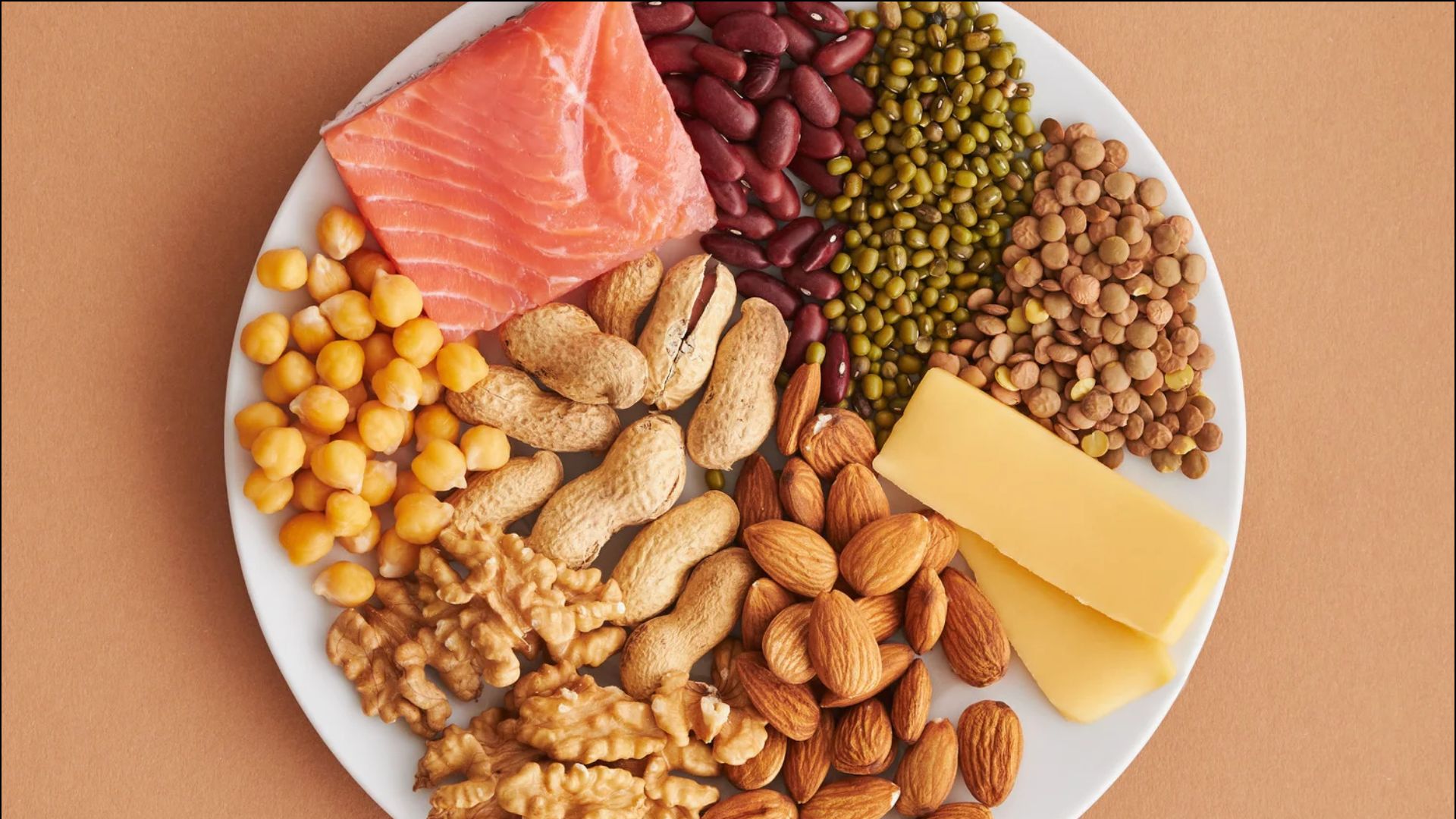
| Animal protein | Plant protein | |
|---|---|---|
| Examples | Meat, poultry, fish, eggs, dairy | Legumes, soy, tofu, tempeh, seitan, nuts, seeds, grains |
| Essential amino acids | All 9 in good amounts | Usually lower in one or more (except soy) |
| Leucine (key for muscle) | Higher | Usually lower |
| Digestibility | Very high | Slightly lower |
| Fiber | None | Often high |
| Saturated fat | Varies: higher in red meat and full-fat dairy | Usually low |
What “complete protein” really means
Proteins are made of 20 amino acids. Nine of them are essential, which means your body can’t make them and you need to get them from food [1]. A “complete” protein contains all nine in the amounts your body needs.
Animal proteins are complete. Most plant proteins are lower in at least one essential amino acid: grains tend to be low in lysine, and legumes in methionine. There’s one big exception: soy. Soy protein has a PDCAAS score of 1.0, the highest possible on this protein-quality scale, the same as eggs, dairy and meat [2].
The good news: you don’t need to combine plant proteins at every meal. As long as you eat a variety of them throughout the day, like beans at lunch and whole grains at dinner, your body gets the full set.
Muscle: does plant protein work as well?
For building muscle, gram for gram, animal protein has a small edge. A review in the Journal of Nutrition explains why: plant proteins tend to be a bit less digestible, more of their amino acids are used by the gut and liver before reaching your muscles, and most of them have less leucine, the amino acid that “switches on” muscle building [3].
The same review suggests simple ways to close the gap:
- Eat a little more. A slightly larger portion of plant protein makes up for its lower leucine.
- Combine sources. Mixing legumes, soy and grains gives a more balanced amino acid profile.
- Choose the strongest plant proteins. Soy, tofu, tempeh and edamame are the best options for muscle.
If you train and eat mostly plants, aiming for the higher end of the recommended range, around 1.6 g per kilogram of body weight, is a smart approach. My daily protein guide shows how to calculate it.
Long-term health: what large studies show
One of the biggest studies on this topic followed more than 170,000 American nurses and health professionals for up to 32 years. Higher plant protein intake was linked to a lower risk of death from cardiovascular disease. Replacing 3% of calories from processed red meat with plant protein was associated with a 44% lower risk of death from any cause. The differences were smaller when replacing unprocessed red meat (12%) or eggs (19%) [4].
Two important details. First, this was an observational study, so it shows associations, not cause and effect. Second, the links were only seen in people with at least one unhealthy lifestyle factor, such as smoking, heavy drinking, obesity or inactivity. The take-home message isn’t that animal protein is dangerous, but that swapping some processed meat for beans, lentils or tofu is a sensible choice.
Your gut microbiota responds within days
This is the part closest to my training in microbiota and digestive health. In a study published in Nature, volunteers ate two extreme diets for five days each: one almost entirely animal-based (meat, eggs and cheese) and one plant-based (grains, legumes, fruit and vegetables). Their gut bacteria changed within a single day. On the animal-based diet, bile-tolerant bacteria increased, while bacteria that ferment plant fiber decreased [5].
Most of us don’t eat either extreme. But it shows how quickly your gut responds to your plate. Plant proteins come packaged with fiber, the main food for your gut bacteria, while animal proteins have none. Including both is an easy way to get high-quality protein and feed your microbiota at the same time.
The best plant protein sources
Approximate values from USDA data and typical labels [6]:
| Food | Serving | Protein | Bonus |
|---|---|---|---|
| Extra-firm tofu | 7 oz (½ block) | About 20 g | Complete protein |
| Tempeh | 3 oz | About 17 g | Fermented, complete protein |
| Seitan | 3 oz | About 20 g (check label) | Very high protein, made from wheat gluten |
| Lentils, cooked | 1 cup | About 18 g | About 15 g fiber |
| Edamame, shelled | 1 cup | About 18 g | Complete protein |
| Black beans, cooked | 1 cup | About 15 g | About 15 g fiber |
| Chickpeas, cooked | 1 cup | About 14 g | Great for salads and roasting |
| Quinoa, cooked | 1 cup | About 8 g | Adds protein to grain bowls |
| Soy milk, unsweetened | 1 cup | About 7 g | Closest plant milk to dairy |
| Peanut butter | 2 tbsp | About 7 g | Calorie-dense: measure it |
Fun fact: peanuts aren’t nuts at all. They’re legumes, like beans and lentils, which is why peanut butter has more protein than most nut butters.
How to combine plant and animal protein
You don’t need to go vegan or eat steak every day. A flexible approach gives you the best of both:
- Half and half: mix ground beef with lentils in a sauce, or add beans to a chicken chili.
- Plant-based days: try one or two days a week built around tofu, lentils or beans, like my high-protein lentil stew or crispy tofu with broccoli and rice.
- Animal protein with plants on the side: pair fish, eggs or chicken with legumes and vegetables.
- Dairy and eggs as easy boosters: Greek yogurt and eggs are complete, inexpensive and work in almost any diet.
Frequently asked questions
Can you build muscle on plant protein alone?
Yes. You may need to eat a little more protein in total and focus on soy, legumes and a variety of sources, but plant-based eaters can absolutely build muscle with strength training.
Which plant protein is closest to animal protein?
Soy. Tofu, tempeh, edamame and soy milk provide all nine essential amino acids in good amounts.
Is animal protein bad for you?
No. Fish, eggs, dairy and lean poultry are nutritious foods. Research mainly points to limiting processed meats and including more plant protein, not avoiding animal protein completely.
Do I need to combine rice and beans in the same meal?
No. Eating a variety of plant proteins over the day is enough for your body to get all the essential amino acids.
Sources
- MedlinePlus, U.S. National Library of Medicine. Amino acids. medlineplus.gov
- Hughes GJ, et al. Protein digestibility-corrected amino acid scores (PDCAAS) for soy protein isolates and concentrate: criteria for evaluation. J Agric Food Chem. 2011;59(23):12707–12712. PubMed
- van Vliet S, Burd NA, van Loon LJC. The skeletal muscle anabolic response to plant- versus animal-based protein consumption. J Nutr. 2015;145(9):1981–1991. ACU Research Bank
- Song M, Fung TT, Hu FB, et al. Association of animal and plant protein intake with all-cause and cause-specific mortality. JAMA Intern Med. 2016;176(10):1453–1463. TCTMD
- David LA, Maurice CF, Carmody RN, et al. Diet rapidly and reproducibly alters the human gut microbiome. Nature. 2014;505(7484):559–563. PubMed
- USDA Agricultural Research Service. FoodData Central. fdc.nal.usda.gov
This article is for general information and is not medical advice. If you have a medical condition or follow a special diet, talk to your doctor or a registered dietitian.