
Pancakes are my favorite weekend breakfast, but a regular stack is mostly flour and syrup, and I’m hungry again an hour later. These protein pancakes fix that. They’re soft and fluffy, they taste like normal pancakes, and one serving has about 33 grams of protein before you even add toppings.
I make the batter in one bowl in about 5 minutes, and the whole thing is on the table in 15. Below you’ll find my base recipe, a version without protein powder, a cottage cheese version, and the toppings I rotate so they never get boring.
| Protein | Calories | Time | Protein Score |
|---|---|---|---|
| 33 g per serving | About 405 kcal | 15 min | B (8.1 g per 100 kcal) |
Why most protein pancakes turn out dry (and how to fix it)
If you’ve ever made protein pancakes that tasted like rubber, the problem was almost certainly too much protein powder. Whey protein absorbs a lot of liquid and firms up quickly with heat, so recipes that replace most of the flour with powder end up dense and chewy.
The trick is balance. I keep regular flour as the base and add just one scoop of protein powder, then get the rest of the protein from eggs and Greek yogurt. The yogurt is the secret ingredient: it adds protein, keeps the pancakes moist, and reacts with the baking powder to make them rise.
- Don’t use more than 1 scoop of powder for this amount of flour. More powder means drier pancakes.
- Let the batter rest for 5 minutes. The flour and powder hydrate, and the batter thickens slightly so the pancakes hold their shape.
- Cook on medium-low heat. Protein browns fast, so high heat burns the outside before the middle is cooked.
Higher-protein meals tend to increase fullness compared with lower-protein meals in controlled studies [1], which is why a protein-rich breakfast can make it easier to wait until lunch. If you lift weights, eating enough protein across the day also helps you build more muscle from your training [2]. Each serving of these pancakes covers a big part of a typical breakfast protein target.
What each ingredient does
| Ingredient | Why it’s there |
|---|---|
| All-purpose or oat flour | Gives structure and that classic pancake texture. Oat flour makes them a little denser and nuttier. |
| Vanilla protein powder | Adds about 24 g of protein to the batch. Whey or a whey-casein blend works best; plant protein makes thicker batter, so add an extra splash of milk. |
| Plain Greek yogurt | Adds protein and moisture, and its acidity helps the pancakes rise. |
| Eggs | Bind the batter and add protein and richness. |
| Baking powder | Makes them fluffy. Check that yours isn’t expired; old baking powder is the most common reason pancakes stay flat. |
| Milk | Adjusts the thickness. Any milk works, including protein milk or unsweetened soy milk. |
My fluffy protein pancakes
This makes about 8 small pancakes, enough for 2 servings. The recipe card lets you change the number of servings and switch between US and metric units.
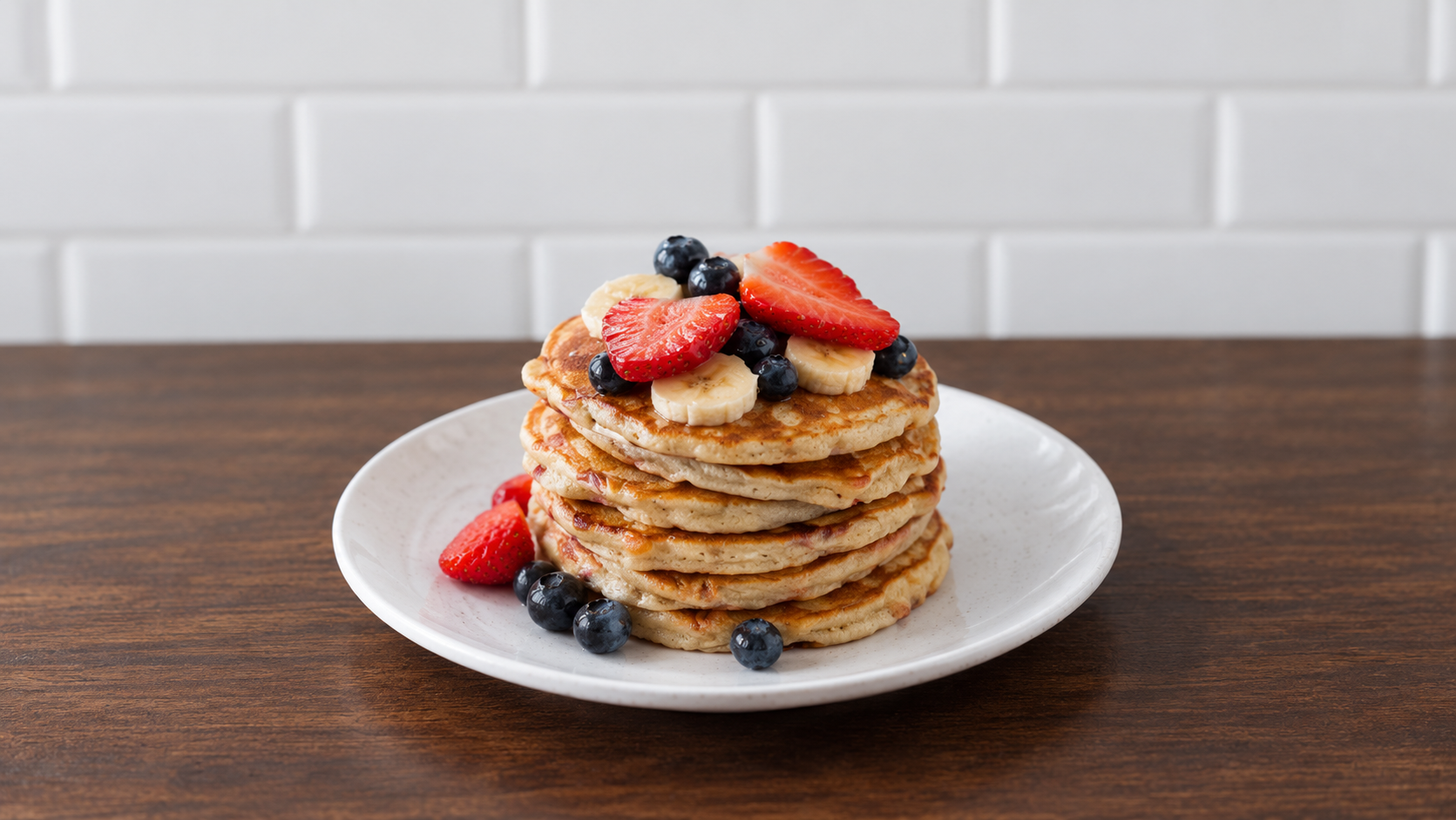
Fluffy Protein Pancakes
Ingredients
Method
- In a large bowl, whisk the flour, protein powder, baking powder and salt.
- In another bowl, whisk the eggs, Greek yogurt, milk, maple syrup and vanilla until smooth.
- Pour the wet ingredients into the dry ones and stir just until there are no dry spots. Let the batter rest for 5 minutes. If it’s too thick to pour, add 1–2 tbsp more milk.
- Heat a nonstick pan over medium-low heat and grease it lightly with butter or cooking spray.
- Pour ¼ cup of batter per pancake. Cook for about 2 minutes, until bubbles form on top and the edges look set, then flip and cook 1 more minute.
- Serve warm with Greek yogurt, berries, and a drizzle of peanut butter or maple syrup.
Notes
Tips for perfect pancakes
- Use a ¼-cup measure to pour the batter so every pancake is the same size and cooks evenly.
- Flip when you see bubbles on the surface and the edges look set, usually after 2 minutes. Cook the second side for about 1 more minute.
- Wipe the pan between batches and add a tiny bit of butter or cooking spray. Too much fat makes spotty, greasy pancakes.
- Keep them warm in a 200°F (95°C) oven on a baking sheet while you cook the rest.
With or without protein powder
Not everyone keeps protein powder at home, so I tested two other versions. All three use the same method; only the ingredients below change.
| Version | What to change | Per serving |
|---|---|---|
| Classic (recipe card) | 1 scoop vanilla protein powder + Greek yogurt | About 405 kcal, 33 g protein |
| No protein powder | Skip the powder and use 1 cup (120 g) flour instead of ¾ cup | About 400 kcal, 22 g protein |
| Cottage cheese | Blend ¾ cup (170 g) cottage cheese with the eggs and milk, and use it instead of the Greek yogurt | About 425 kcal, 33 g protein |
The cottage cheese version is my favorite when I want them extra soft. Blend it until smooth first, or you’ll get little curds in the pancakes. If you love cottage cheese, try my cottage cheese ice cream too.
Toppings that add even more protein
| Topping | Amount | Adds about |
|---|---|---|
| Plain Greek yogurt | ¼ cup (60 g) | 6 g protein, 35 kcal |
| Peanut butter | 1 tbsp | 4 g protein, 95 kcal |
| Chopped almonds or walnuts | 1 tbsp | 2 g protein, 50 kcal |
| Fresh berries | ½ cup | 1 g protein, 35 kcal |
| Maple syrup | 1 tbsp | 0 g protein, 52 kcal |
My go-to stack is a thick layer of Greek yogurt with a spoonful of warm berry compote (frozen mixed berries heated for a few minutes until jammy) and a handful of blueberries and red currants on top. On other days I keep it simple with fresh strawberries, raspberries and a few slices of banana. Both look like a café breakfast and keep me full until lunch.
Meal prep, storage and freezing
- Fridge: let the pancakes cool, then store them in an airtight container and eat them within 3–4 days [3].
- Freezer: freeze them in a single layer on a tray, then move them to a freezer bag with parchment paper between them. They’re best within 2 months.
- Reheat: toast them straight from frozen, or microwave 2–3 pancakes for 30–45 seconds.
A double batch on Sunday gives you a fast breakfast for busy weekdays. They fit well into a high-protein meal prep plan, and on mornings when you don’t feel like cooking at all, protein oatmeal is an easy backup.
Common mistakes to avoid
- Overmixing the batter. Stir just until there are no dry spots. A few small lumps are fine and make fluffier pancakes.
- Pressing the pancakes with the spatula. It squeezes out the air bubbles and makes them flat.
- Skipping the rest. Batter made with protein powder needs those 5 minutes to thicken.
- Using a very hot pan. If the first pancake browns in under a minute, turn the heat down.
Frequently asked questions
Can I make protein pancakes without protein powder?
Yes. Use 1 cup of flour instead of ¾ cup and skip the powder. The eggs and Greek yogurt still give you about 22 g of protein per serving.
Which protein powder is best for pancakes?
A vanilla whey or whey-casein blend gives the softest result. Plant-based powders work too, but they absorb more liquid, so add 2–3 extra tablespoons of milk.
Why are my protein pancakes rubbery?
Usually too much protein powder, overmixing, or cooking on high heat. Stick to 1 scoop, stir gently, and cook on medium-low.
Can I make the batter the night before?
It’s better fresh, because the baking powder loses strength overnight. If you want to save time, mix the dry ingredients the night before and add the wet ones in the morning.
Are these pancakes gluten-free?
Not with all-purpose flour. Use certified gluten-free oat flour or a 1:1 gluten-free flour blend, and check that your protein powder is gluten-free.
Sources
- Paddon-Jones D, Westman E, Mattes RD, Wolfe RR, Astrup A, Westerterp-Plantenga M. Protein, weight management, and satiety. Am J Clin Nutr. 2008;87(5):1558S–1561S. AJCN
- Morton RW, Murphy KT, McKellar SR, et al. A systematic review, meta-analysis and meta-regression of the effect of protein supplementation on resistance training-induced gains in muscle mass and strength in healthy adults. Br J Sports Med. 2018;52(6):376–384. PubMed
- USDA Food Safety and Inspection Service. Leftovers and Food Safety. fsis.usda.gov
- USDA Agricultural Research Service. FoodData Central. fdc.nal.usda.gov
This article is for general information and is not medical advice. Nutrition values are estimates based on USDA data [4] and vary with the protein powder, yogurt and toppings you use.