
I was skeptical about cottage cheese ice cream until I tried it. Blended until completely smooth, cottage cheese turns into something that tastes a lot like frozen cheesecake: creamy, a little tangy and sweet enough to feel like dessert. The best part is that a scoop has about 12 grams of protein, so it works as an evening treat when I still need protein for the day.
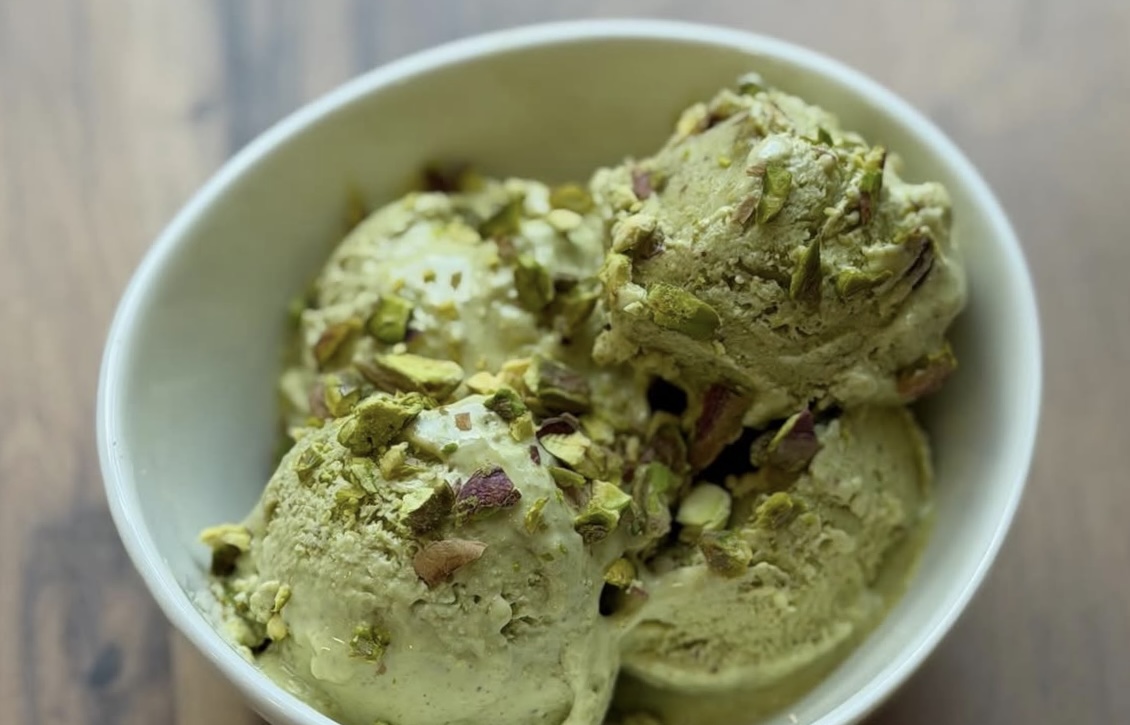
Most recipes assume you own a Ninja Creami. I tested it both ways, so below you’ll find how to make it with a regular freezer and a loaf pan, plus four flavors I keep going back to. The pistachio one in the photo is my favorite.
| Protein | Calories | Active time | Protein Score |
|---|---|---|---|
| 12 g per ½ cup | About 135 kcal | 5 min (+ freezing) | B (8.9 g per 100 kcal) |
Cottage cheese ice cream vs. regular ice cream
I don’t think of this as a replacement for real ice cream. It’s a different dessert that happens to be high in protein. Still, the numbers explain why I make it so often:
| Per ½ cup | Calories | Protein | Protein per 100 kcal |
|---|---|---|---|
| Vanilla cottage cheese ice cream (this recipe) | About 135 kcal | 12 g | 8.9 g |
| Regular vanilla ice cream | About 137 kcal | 2–3 g | Under 2 g |
Calories are almost the same, but you get roughly four to five times more protein [1]. What you give up is some of the airy, melt-in-your-mouth texture that churned ice cream has. Homemade cottage cheese ice cream is denser and closer to a frozen cheesecake or a thick frozen yogurt.
The secret: blend it until it’s completely smooth
If your cottage cheese ice cream tastes like cottage cheese, it almost always means it wasn’t blended long enough. The curds have to disappear completely. In a blender this takes 1–2 minutes; stop and scrape down the sides once or twice. When you rub a little between your fingers, it should feel like Greek yogurt, with no grains at all.
- Use 2% or full-fat cottage cheese. Fat-free versions freeze harder and taste icier.
- Use a liquid sweetener. Maple syrup or honey blends in smoothly and keeps the ice cream softer than granulated sugar.
- Don’t skip the pinch of salt. It makes the vanilla and chocolate taste more like real ice cream.
2% cottage cheese has about 11 g of protein per 100 g [1], so 2 cups give the whole batch close to 50 g. Most of that protein is casein, which your body digests more slowly than whey [2]. Higher-protein snacks also tend to keep you fuller than low-protein ones in controlled studies [3].
Which cottage cheese works best
I’ve made this with several brands, and the type of cottage cheese matters more than the brand. Here’s what to look for at the store:
- 2% or 4% milkfat. A little fat gives a creamier, less icy result. Fat-free works, but it freezes rock-hard.
- Small or large curd: it doesn’t matter. Everything gets blended, so buy whichever you like.
- Plain only. Skip versions with fruit on the bottom or added flavors, and check the label for thickeners if you want the cleanest taste.
- Check the sodium. Cottage cheese is naturally salty, with about 350 mg of sodium per ½ cup [1]. If your brand tastes salty on its own, leave out the pinch of salt in the recipe.
- Lactose-free cottage cheese works too. It blends and freezes the same way.
My vanilla cottage cheese ice cream
This is the base for every flavor. Make it as is, or blend in one of the flavors below before freezing.
Cottage Cheese Ice Cream
Ingredients
Method
- Add the cottage cheese, maple syrup, vanilla and salt to a blender or food processor. Blend for 1–2 minutes, scraping down the sides once or twice, until completely smooth with no curds left.
- Taste and add a little more sweetener if you like. For a flavor, blend in the cocoa and peanut butter or strawberries now; fold chunky add-ins in at the end.
- Freezer method: pour into a loaf pan, cover and freeze for 3–4 hours. Stir every 45 minutes during the first 2 hours to break up ice crystals.
- Ninja Creami method: pour into a Creami pint, freeze for 24 hours, then run the “Lite Ice Cream” program. If it’s crumbly, add 1 tbsp milk and use “Re-spin”.
- If it’s frozen solid, let it sit on the counter for 10–15 minutes, then scoop and serve.
Notes
Without a Ninja Creami vs. with one
| Freezer + loaf pan | Ninja Creami | |
|---|---|---|
| Freezing time | 3–4 hours | 24 hours in the pint |
| Effort | Stir every 45 minutes for the first 2 hours | Freeze, then run the “Lite Ice Cream” program |
| Texture | Like frozen cheesecake, scoopable after a short rest | Softer and smoother, like soft serve |
| If it’s too hard | Leave it on the counter for 10–15 minutes | Add 1 tbsp milk and use “Re-spin” |
Honestly, both are good. The freezer version is my choice when I make it in the afternoon and want it after dinner. Stirring during the first 2 hours breaks up ice crystals, so don’t skip it.
4 flavors to try
Add these to the vanilla base. Blend the cocoa and peanut butter in; fold the chunky add-ins in at the end so they stay in pieces.
| Flavor | Add to the base | Per ½ cup |
|---|---|---|
| Chocolate peanut butter | Blend in 2 tbsp unsweetened cocoa powder and 2 tbsp creamy peanut butter | About 185 kcal, 14 g protein |
| Strawberry cheesecake | Blend in 1 cup chopped strawberries; top with 1 crushed graham cracker sheet | About 160 kcal, 12 g protein |
| Pistachio | Blend in 2 tbsp pistachio butter or pistachio cream; top with 2 tbsp chopped pistachios | About 200 kcal, 14 g protein |
| Cookie dough | Blend in 2 tbsp almond flour; fold in 2 tbsp mini chocolate chips | About 180 kcal, 13 g protein |
The pistachio version is the one I make most often. The pistachio butter makes it extra creamy and hides the tang of the cottage cheese completely, and the chopped pistachios on top add crunch. Use unsweetened pistachio butter if you can find it, and taste before freezing in case you want a little more maple syrup.
Tip: strawberries add water, so the strawberry version freezes a bit harder. Give it an extra 5 minutes on the counter before scooping.
Common mistakes to avoid
- Not blending long enough. Little curds turn into icy, grainy bits once frozen. Blend until it looks like thick yogurt.
- Leaving it in the freezer overnight without stirring. The freezer method needs stirring during the first 2 hours. If you forget, let it thaw for 20 minutes and blend it again.
- Adding too much fruit. More than about 1 cup of fruit adds a lot of water and makes the ice cream icy.
- Using only powdered sweeteners. Sugar and syrups keep the texture soft. With powdered sweeteners alone it freezes much harder.
Toppings I like
A simple topping makes it feel like a proper dessert. My favorites are fresh berries, a drizzle of warm peanut butter, chopped toasted almonds or pistachios, a few cacao nibs, or a spoonful of granola for crunch. Keep toppings small if you’re watching calories: one tablespoon of peanut butter adds about 95 kcal.
How to store it
- Freezer: keep it covered in an airtight container. It’s at its best within 1 week; after that it gets icier.
- Before serving: let it soften on the counter for 10–15 minutes, then scoop.
- Make single portions: freeze it in small containers or a muffin tin lined with paper cups, so you only thaw what you’ll eat.
Want more protein before bed or after the gym? It pairs well with my iced protein coffee in the afternoon, and you can find more ideas in my high-protein meal prep plan.
Frequently asked questions
Does cottage cheese ice cream taste like cottage cheese?
Not if it’s blended until fully smooth. It tastes mildly tangy, a lot like cheesecake. The chocolate peanut butter flavor hides the tang completely.
Can I make cottage cheese ice cream without a Ninja Creami?
Yes. Freeze the blended mixture in a loaf pan for 3–4 hours, stirring every 45 minutes for the first 2 hours. Let it rest on the counter for 10–15 minutes before scooping.
Why is my cottage cheese ice cream icy?
Fat-free cottage cheese, too little sweetener or a long time in the freezer are the usual causes. Use 2% or full-fat cottage cheese, a liquid sweetener, and eat it within a week.
Can I use a sugar-free sweetener?
Yes. A sugar-free maple-flavored syrup or an allulose-based sweetener works. Sugar keeps ice cream soft, so sugar-free versions freeze harder and need a longer rest before scooping.
How much protein is in cottage cheese ice cream?
This recipe has about 12 g of protein per ½ cup and close to 50 g in the whole batch. The exact number depends on your cottage cheese: check the label, since brands range from about 11 to 14 g of protein per ½ cup.
Can I add protein powder?
Yes. Blend in 1 scoop (about 30 g) of vanilla or chocolate protein powder with 2–3 tbsp of milk so the mixture doesn’t get too thick. It adds about 20–25 g of protein to the batch, but it can make the ice cream freeze a little harder, so give it a few extra minutes on the counter.
Sources
- USDA Agricultural Research Service. FoodData Central: Cheese, cottage, lowfat, 2% milkfat. fdc.nal.usda.gov
- Boirie Y, Dangin M, Gachon P, et al. Slow and fast dietary proteins differently modulate postprandial protein accretion. Proc Natl Acad Sci USA. 1997;94(26):14930–14935. PubMed
- Leidy HJ, Clifton PM, Astrup A, et al. The role of protein in weight loss and maintenance. Am J Clin Nutr. 2015;101(6):1320S–1329S. PubMed
This article is for general information and is not medical advice. Nutrition values are estimates and vary with the brand of cottage cheese and sweetener you use.