
A good omelette is one of the fastest high-protein meals you can make: one pan, a few ingredients and about 10 minutes. The trick to making it really high in protein, without eating six whole eggs, is to combine whole eggs with egg whites and add a lean filling like ham and a little cheese. The result is a soft, fluffy omelette with about 43 grams of protein for under 400 calories.
Below you’ll find my method for a tender omelette that doesn’t turn rubbery, a comparison of whole eggs and egg whites, five filling ideas, and some interesting research on eggs and fullness, including why cooked eggs beat raw eggs for protein.
| Protein | Calories | Time | Protein Score |
|---|---|---|---|
| 43 g per omelette | About 375 kcal | 10 min | A (11.5 g per 100 kcal) |
Why an egg breakfast keeps you full
If you get hungry an hour after breakfast, the problem is usually a breakfast that’s mostly carbohydrates, like a bagel, cereal or toast with jam. Swapping part of that for eggs makes a noticeable difference for many people.
In a study with overweight and obese adults, participants ate either an egg-based breakfast or a bagel-based breakfast with the same number of calories. After the egg breakfast, they felt more satisfied and ate fewer calories at lunch [1]. This fits with a broader body of research showing that higher-protein meals tend to increase fullness compared with lower-protein meals [2].
A curious fact: cooked eggs give you more protein than raw
Old-school bodybuilding movies made drinking raw eggs look like the ultimate protein hack. Science says the opposite. Researchers in Belgium measured how much egg protein people actually absorbed. From cooked eggs, about 90% of the protein was digested and absorbed in the small intestine. From raw eggs, only about half was [3].
Heat unfolds the egg proteins, which makes them easier for digestive enzymes to break down. Cooking also matters for safety: egg dishes should reach 160°F (71°C), which means no runny, liquid egg left [4]. So your omelette isn’t just tastier than a raw-egg shake; it’s also the better source of protein.
Whole eggs vs. egg whites
Whole eggs bring flavor, color and nutrients like choline and vitamin D from the yolk. Egg whites are almost pure protein with very few calories. Mixing both gives you a great taste and a lot of protein for the calories.
| Per serving | Calories | Protein | Fat |
|---|---|---|---|
| 1 large whole egg | About 72 kcal | 6 g | 5 g |
| 3 tbsp liquid egg whites (about 1 egg white) | About 25 kcal | 5 g | 0 g |
| 2 eggs + ½ cup egg whites (this recipe) | About 205 kcal | 26 g | 10 g |
| 4 whole eggs | About 290 kcal | 25 g | 19 g |
As the table shows, 2 eggs plus ½ cup of egg whites give you about the same protein as 4 whole eggs with roughly 80 fewer calories and half the fat [5]. Cartons of liquid egg whites are the easiest option; they’re pasteurized and easy to measure.
How to make a soft, fluffy omelette
- Whisk well. Beat the eggs and whites for about 30 seconds until no streaks of white remain. A pinch of salt helps the texture.
- Use a nonstick pan and medium-low heat. High heat makes eggs tough and browns the bottom too fast. An 8–10 inch (20–25 cm) pan is the right size for this amount.
- Stir, then let it set. For the first 30 seconds, gently stir the eggs with a spatula, then let them sit. This gives you small, tender curds and an even layer.
- Lift and tilt. Lift the edges with a spatula and tilt the pan so the uncooked egg runs underneath.
- Add the filling when the top is almost set. Put it on one half, then fold the other half over.
- Finish with the lid on. Cover the pan for 30–60 seconds so the cheese melts and the center finishes cooking without overbrowning.
High-protein ham and cheese omelette recipe
This makes 1 large omelette. Serve it with a side salad, like in the photo, or with a slice of whole-grain toast.
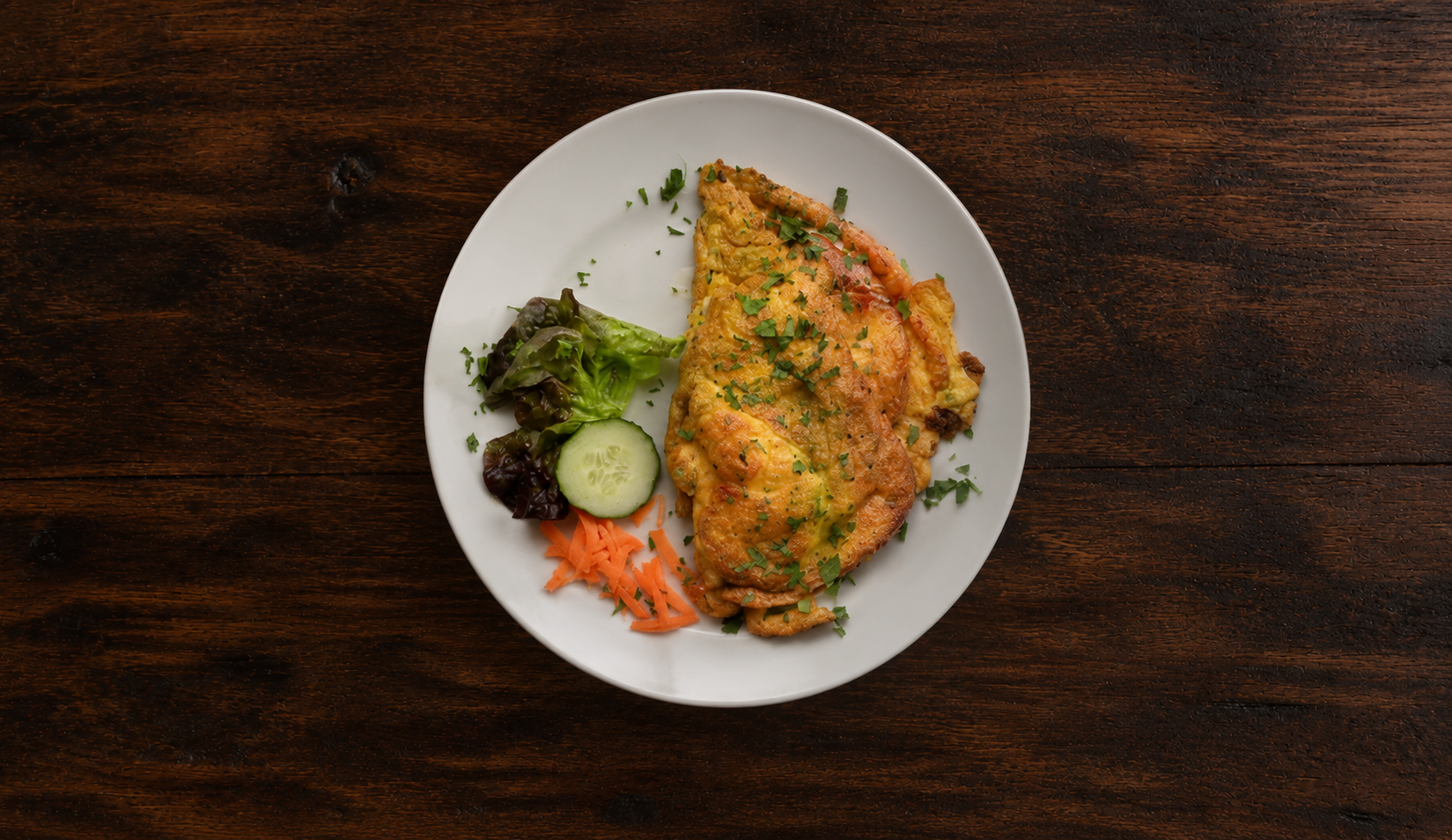
High-Protein Ham and Cheese Omelette
Ingredients
Method
- Whisk the eggs, egg whites, salt and pepper for about 30 seconds until fully combined.
- Heat the butter in an 8–10 inch nonstick pan over medium-low heat. Pour in the eggs and gently stir for 30 seconds, then let them set.
- As the edges set, lift them with a spatula and tilt the pan so the uncooked egg runs underneath. Cook for 2–3 minutes, until the top is almost set.
- Scatter the ham and mozzarella over one half of the omelette. Fold the other half over the filling.
- Cover the pan and cook for 30–60 seconds more, until the cheese melts and no liquid egg remains.
- Slide onto a plate, sprinkle with parsley and serve with a side salad.
Notes
5 filling ideas
Use the same egg base and swap the filling. All values are for the whole omelette.
| Omelette | Filling | About |
|---|---|---|
| Ham and cheese (recipe card) | 2 oz lean ham, ¼ cup shredded mozzarella, parsley | 375 kcal, 43 g protein |
| Spinach and feta | 1 cup baby spinach (wilted), 1 oz feta, cherry tomatoes | 330 kcal, 31 g protein |
| Smoked salmon | 2 oz smoked salmon, 1 tbsp light cream cheese, dill | 335 kcal, 37 g protein |
| Turkey and peppers | 2 oz turkey breast, ½ bell pepper, onion, a pinch of chili | 325 kcal, 38 g protein |
| Cottage cheese and chives | ¼ cup cottage cheese, chives, black pepper | 290 kcal, 32 g protein |
The cottage cheese version is a fun one: it melts into soft, creamy pockets inside the omelette. If you like cottage cheese, my cottage cheese ice cream is the sweet version of this idea.
Psychology tip: an if-then plan for a better breakfast
Knowing you should eat a protein-rich breakfast is easy; actually doing it on a busy morning is harder. Psychologists have a simple tool for this called an implementation intention, or an “if-then plan.” A large meta-analysis found that people who form specific if-then plans are more likely to reach their goals than people who only set the goal [6].
- Make it specific: “If it’s a weekday and I’m making coffee, then I start the eggs while it brews.”
- Remove friction: keep a carton of egg whites, sliced ham and a bag of spinach at the front of the fridge.
- Have a backup: “If I don’t have 10 minutes, then I grab my overnight oats instead.”
Can you meal prep omelettes?
Omelettes are best fresh, but you can prep most of the work ahead. Chop the vegetables and portion the fillings for the week, and keep a carton of egg whites ready. In the morning, everything comes together in under 10 minutes.
If you want a grab-and-go option, bake the same egg mixture in a muffin tin at 350°F (175°C) for 18–20 minutes. Cooled egg bites keep in the fridge for 3–4 days [7] and reheat in about 30 seconds in the microwave.
Common mistakes to avoid
- Cooking on high heat. It makes the eggs rubbery and brown. Low and slow keeps them soft.
- Adding watery vegetables raw. Mushrooms, spinach and tomatoes release water. Sauté them first and drain any liquid.
- Overfilling. Too much filling makes the omelette tear when you fold it. About ¾ cup of filling is plenty.
- Using a pan that’s too big. The eggs spread too thin and overcook. Match the pan to the amount of egg.
Frequently asked questions
How much protein is in an omelette?
A plain 2-egg omelette has about 12 g of protein. This version with egg whites, ham and cheese has about 43 g.
Is an egg white omelette better than a whole egg omelette?
Not necessarily. Egg whites have fewer calories, but the yolk has most of the egg’s vitamins and flavor. A mix of whole eggs and whites, like in this recipe, gives you the best of both.
Should I add milk to my omelette?
You don’t need it. A splash of milk makes the eggs slightly softer, but it also dilutes the flavor. Cooking on low heat matters much more.
Can I eat eggs every day?
For most healthy people, eggs can be part of a balanced daily diet. If you’ve been told to limit dietary cholesterol for a medical reason, egg whites are a good way to keep the protein and reduce the yolks.
How do I know when the omelette is done?
The top should be set with no liquid egg left. Egg dishes should reach 160°F (71°C) in the center.
Sources
- Vander Wal JS, Marth JM, Khosla P, Jen KL, Dhurandhar NV. Short-term effect of eggs on satiety in overweight and obese subjects. J Am Coll Nutr. 2005;24(6):510–515. Full text (PDF)
- Leidy HJ, Clifton PM, Astrup A, et al. The role of protein in weight loss and maintenance. Am J Clin Nutr. 2015;101(6):1320S–1329S. PubMed
- Evenepoel P, Geypens B, Luypaerts A, et al. Digestibility of cooked and raw egg protein in humans as assessed by stable isotope techniques. J Nutr. 1998;128(10):1716–1722. DOI
- FoodSafety.gov. Safe Minimum Internal Temperatures. foodsafety.gov
- USDA Agricultural Research Service. FoodData Central. fdc.nal.usda.gov
- Gollwitzer PM, Sheeran P. Implementation intentions and goal achievement: a meta-analysis of effects and processes. Adv Exp Soc Psychol. 2006;38:69–119. DOI
- USDA Food Safety and Inspection Service. Leftovers and Food Safety. fsis.usda.gov
This article is for general information and is not medical advice. Nutrition values are estimates and vary with the brands and fillings you use.