
These four high-protein meal prep recipes give you 8 ready meals with 25–46 g of protein each, cooked in about 75 minutes on a Sunday. They are the four meals in the photo and the video below: a turkey and potato stew, beef bibimbap bowls, sweet and sour chicken and peppers with rice, and a Mediterranean quinoa chickpea salad. Every recipe has adjustable servings, US or metric units, and nutrition estimated per serving from USDA FoodData Central [8]. How we calculate our numbers.
Below you will find a quick comparison, a cooking timeline, one combined shopping list, a plan for the week and the evidence behind the star ingredient in each dish.
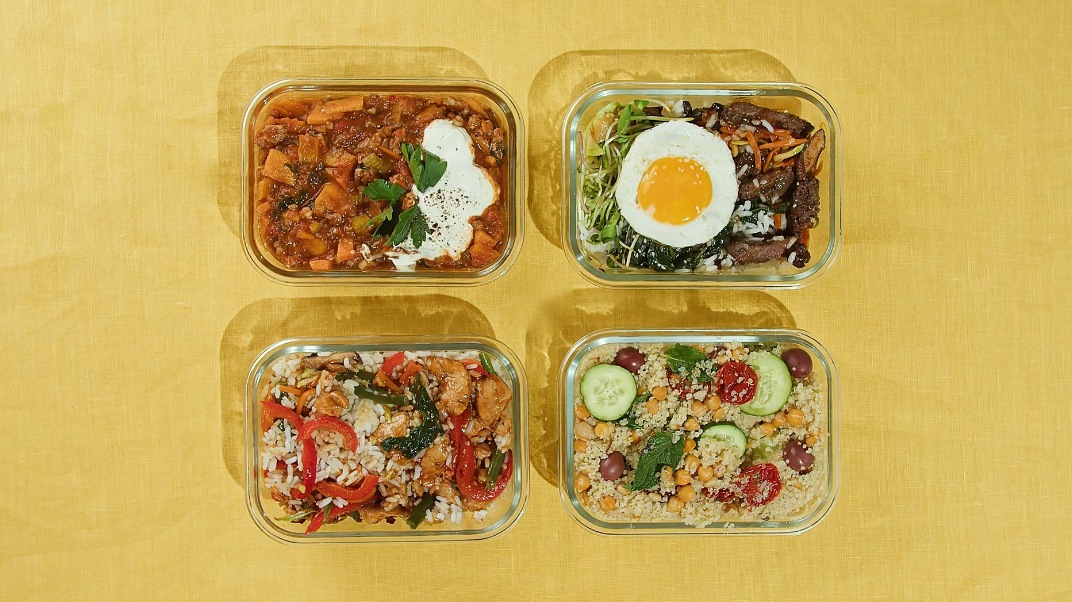
The 4 recipes at a glance
| Recipe | Protein / serving | Calories | Protein Score | Total time |
|---|---|---|---|---|
| Turkey & Potato Stew | 46 g | 525 | B (8.7 g per 100 kcal) | 50 min |
| Beef Bibimbap Bowls | 45 g | 565 | B (8.0 g) | 30 min |
| Sweet & Sour Chicken with Rice | 45 g | 565 | B (8.0 g) | 30 min |
| Mediterranean Quinoa Chickpea Salad | 25 g | 490 | C (5.1 g) | 30 min |
Protein Score is the grams of protein you get for every 100 calories: A = 10 g or more, B = 7 g or more, C = 5 g or more. The quinoa salad scores lower because chickpeas and quinoa bring carbs and fiber along with their protein. It’s the plant-forward option of the week, and the recipe card shows how to take it to about 35 g.
Why a high-protein meal prep works
Protein is the most filling macronutrient. A review of controlled trials published in the American Journal of Clinical Nutrition concluded that higher-protein diets (about 1.2–1.6 g per kg of body weight a day) led to more weight and fat loss and better preservation of lean muscle, and that higher-protein meals increase feelings of fullness. Over the long term, the benefits depended mostly on people actually sticking to the diet [1].
If you also lift weights, a meta-analysis of 49 randomized trials with 1,863 people found that extra protein increases the muscle you gain from training, with the benefit leveling off at around 1.6 g per kg per day [2]. Two prepped meals with 40–45 g each cover a big part of that target.
The psychology: decide once, eat well all week
As a psychologist, this is the part I find most useful. Most healthy-eating plans don’t fail on Sunday, when motivation is high, but on a tired Wednesday at 7 p.m., when you have to decide what to eat. Research on implementation intentions, simple “if-then” plans such as “on weekdays, lunch is the container in the fridge”, shows they help people follow through on their goals: a meta-analysis of 94 studies found a medium-to-large effect on goal achievement [9].
Meal prep is that plan made physical. The decision has already been made, so you don’t rely on willpower when you’re hungry. The weekly plan below works the same way: you know exactly which container to open each day.
Your 75-minute Sunday prep plan
Here’s what a weekly prep session looks like, in 40 seconds: plan the menu, prep and cook everything at once, season it, portion it into airtight containers and refrigerate. Then the best part: home-cooked lunches ready all week.
Work by ingredient, not by recipe
The stew, the bibimbap and the sweet and sour chicken share several ingredients. Instead of cooking one recipe from start to finish and then starting the next, prepare each shared ingredient once, in all the shapes you need, and split it between the recipes. You wash one cutting board, cook the rice in one pot and keep all three recipes moving at the same time.
| Ingredient | Prep it once | Where it goes |
|---|---|---|
| Rice | Cook 1 cup dry rice in one pot | Half for the bibimbap (2), half for the sweet and sour chicken (3) |
| Garlic | Mince 4 cloves at once | 2 for the stew (1), 1 for the beef marinade (2), 1 for the sauce (3) |
| Carrots | Cut 2 into dice, then 1 into thin matchsticks and 1 into strips | Dice for the stew (1), matchsticks for the bibimbap (2), strips for the stir-fry (3) |
| Spinach | Wash 6–7 cups together | 2 cups in the stew (1), 4 cups for the bibimbap (2), a handful in the stir-fry (3) |
| Onions | Dice the onion, cut the green onions | Onion for the stew (1), green onions for the stir-fry (3) |
| Low-sodium soy sauce | Measure 3 tbsp | 2 tbsp in the beef marinade (2), 1 tbsp in the sweet and sour sauce (3) |
| Skillet | Sear the beef first, wipe the pan | Then use it for the sweet and sour chicken (3) |
The quinoa salad (4) is the exception. It doesn’t share ingredients with the other three, so it’s prepared on its own: the quinoa cooks in its own small pot at the start and the salad is assembled cold at the end. The only thing it shares is the Greek yogurt, which also tops the stew.
The timeline
- 0:00 – Start 1 cup of rice in one pot and the quinoa in another (recipe 4).
- 0:05 – Prep station: mince all the garlic, cut all the carrots in their three shapes, dice the onion and celery, crack the potatoes, wash all the spinach and slice the peppers and green onions. Put each recipe’s pile on its own plate.
- 0:15 – Slice the beef and put it in its marinade (recipe 2). Brown the turkey, add the stew vegetables, potatoes and tomatoes and leave it to simmer (recipe 1).
- 0:25 – Whisk the sweet and sour sauce and coat the chicken in cornstarch (recipe 3).
- 0:30 – In the skillet: wilt the bibimbap spinach, then sear the beef (recipe 2). Wipe the pan.
- 0:40 – In the same skillet, stir-fry the sweet and sour chicken and peppers (recipe 3). Boil the eggs for 7 minutes.
- 0:55 – Assemble the quinoa salad and whisk its yogurt dressing (recipe 4). Stir the spinach into the stew and check that it’s done.
- 1:05 – Portion everything into 8 containers, let them cool, close the lids and refrigerate. Freeze one portion of stew.
When to eat each meal
| Day | Lunch | Dinner |
|---|---|---|
| Monday | Beef bibimbap bowl | Sweet & sour chicken |
| Tuesday | Beef bibimbap bowl | Sweet & sour chicken |
| Wednesday | Quinoa chickpea salad | Turkey stew |
| Thursday | Quinoa chickpea salad | Turkey stew (from freezer) |
Cooked leftovers keep 3–4 days in the fridge, so move the frozen stew to the fridge on Wednesday night [7]. Friday is a good day to cook something fresh or try a new recipe.
One shopping list for all 4 recipes
- Protein: 12 oz 93% lean ground turkey, 10 oz sirloin or flank steak, 12 oz chicken breast, 2 eggs, 1 cup nonfat plain Greek yogurt, 1 oz feta
- Produce: 2 potatoes, 4 carrots, 1 onion, 1 small red onion, 2 celery stalks, 2 red bell peppers, 6 cups spinach, 1 cup bean sprouts, ½ cucumber, 1 cup cherry tomatoes, 7 green onions, 1 lemon, 1 head of garlic, fresh ginger, fresh mint and parsley
- Pantry: long-grain white rice, quinoa, 1 can crushed tomatoes, 2 cans chickpeas, bay leaves, kalamata olives, low-sodium broth (optional), low-sodium soy sauce, ketchup, rice vinegar, cornstarch, honey, sesame oil, olive oil, gochujang (optional)
- Spices: smoked paprika, dried oregano, salt and pepper
Recipe 1: Turkey & Potato Stew with Vegetables
The top-left container. A tomato-braised stew with lean turkey, soft potatoes, carrots, celery and spinach, finished with a spoonful of Greek yogurt. It tastes even better on day three.
Star ingredient: cooked tomatoes. Tomatoes are the main source of lycopene in the American diet, and cooking makes it easier to absorb. In a study in the American Journal of Clinical Nutrition, people absorbed more lycopene from tomato paste than from the same amount of fresh tomatoes [10]. The carrots add beta-carotene, which the body turns into vitamin A [5].
- Crack the potatoes: instead of dicing them, make a small cut and twist the knife to break off rough chunks. The broken edges release starch and thicken the sauce, which is why the stew looks so creamy.
- Greek yogurt on top: most of its protein is casein, a “slow” milk protein that releases amino acids more gradually than whey [4]. It adds about 6 g of protein per serving.
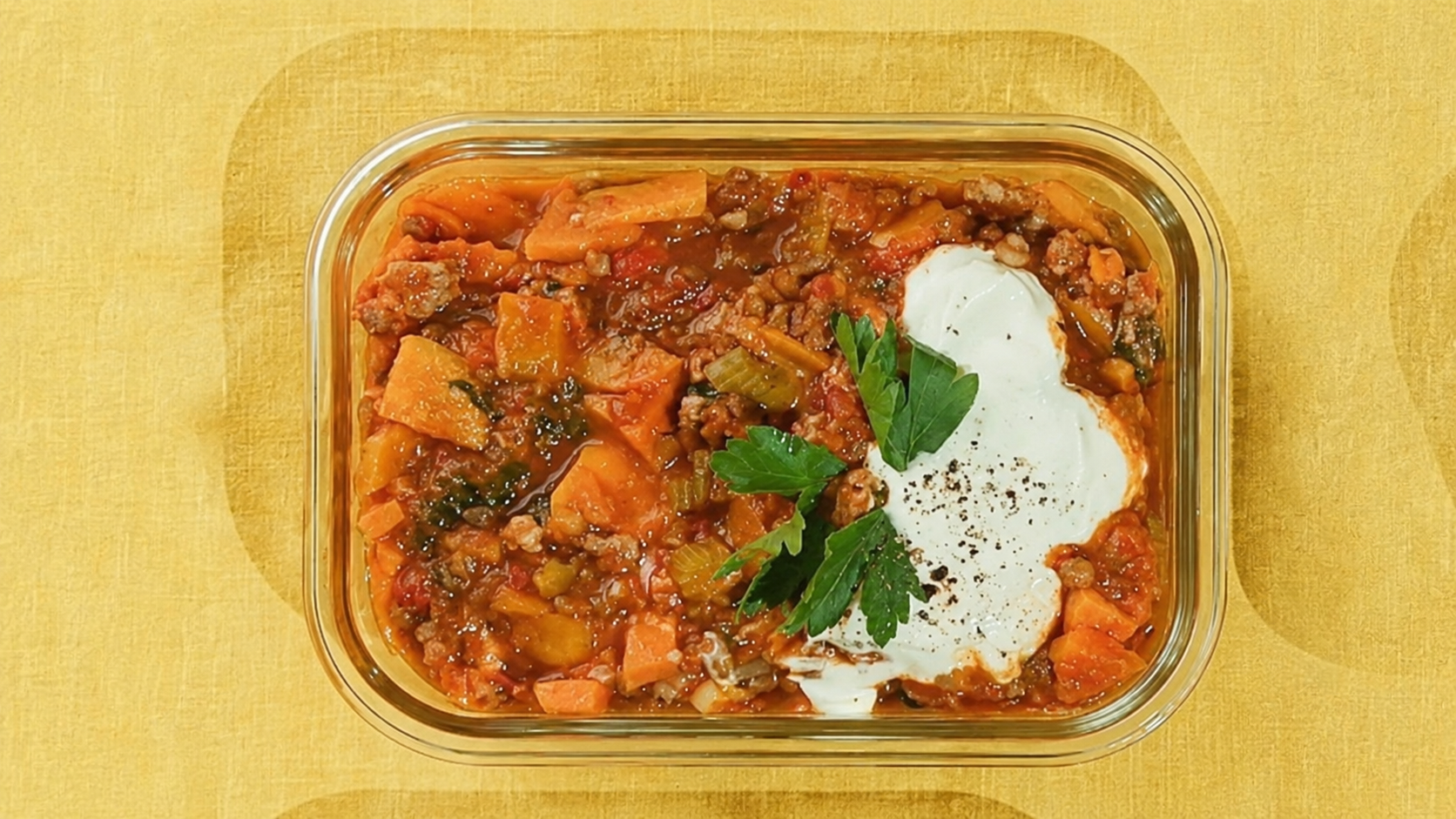
Turkey and Potato Stew with Vegetables and Greek Yogurt
Ingredients
Method
- Heat the oil in a pot over medium-high heat and brown the turkey for 5–6 minutes, breaking it up with a spoon.
- Add the onion, celery and carrots and cook for 4–5 minutes, until soft. Stir in the garlic, paprika and oregano for 30 seconds.
- Crack the potatoes: make a small cut in the potato with a knife and twist the blade to break off an irregular chunk. Repeat until the whole potato is in rough 1-inch pieces. Add them to the pot.
- Add the crushed tomatoes, water and bay leaf. Bring to a boil, cover and simmer on low for 25 minutes, stirring now and then, until the potatoes are very tender and the sauce has thickened.
- Remove the bay leaf, stir in the spinach until it wilts and season with salt and pepper.
- Divide between 2 containers. Top with a spoonful of Greek yogurt, black pepper and parsley just before eating.
Notes
Recipe 2: Beef Bibimbap Bowls
The top-right container. Bibimbap means “mixed rice” in Korean: rice topped with seasoned vegetables, beef and an egg, mixed together right before eating.
Star ingredient: beef. Beef is a source of heme iron, the form of iron found in meat, poultry and seafood, which the body absorbs better than the non-heme iron in plant foods [6]. Ten ounces of lean steak for two bowls gives each serving most of its 45 g of protein.
- Tender beef: slice it thinly against the grain. Partly freezing the steak for 20 minutes makes it much easier to cut.
- The egg: fry it fresh the day you eat the bowl, or use a 7-minute boiled egg in the container.
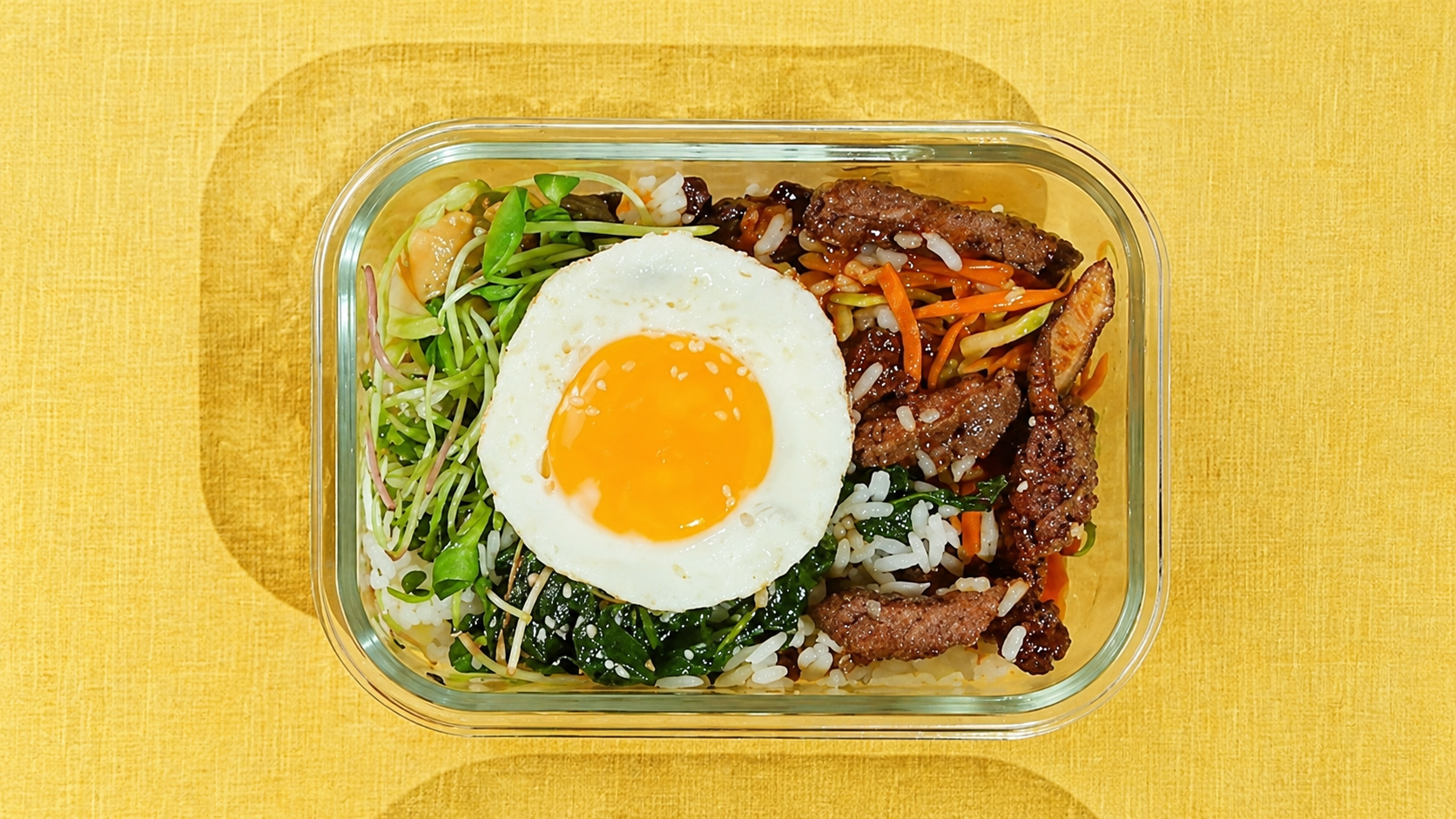
Beef Bibimbap Meal Prep Bowls
Ingredients
Method
- Mix the beef with the soy sauce, honey, sesame oil and garlic and let it marinate for 10 minutes.
- Wilt the spinach in a hot pan for 1 minute and season with a pinch of salt.
- Sear the beef in the same hot pan in a single layer for 2–3 minutes, until browned.
- Divide the rice between 2 containers and arrange the beef, spinach, carrot and sprouts on top.
- Fry the eggs the day you eat the bowls, or use 2 jammy boiled eggs for the containers. Drizzle with gochujang before serving.
Notes
Recipe 3: Sweet & Sour Chicken and Peppers with Rice
The bottom-left container. A lighter take on the takeout classic: chicken breast seared with a thin cornstarch coating instead of battered and deep-fried, red peppers, carrot and green onions, and a quick homemade sauce made with ketchup, rice vinegar, honey and soy. The rice is cooked separately, in a pot or from a microwave pouch.
Star ingredient: chicken breast. Skinless chicken breast is one of the leanest whole-food proteins, with about 22 g of protein per 100 g raw [8]. That is why one serving reaches 45 g of protein, the kind of high-protein meal linked to greater fullness in short-term trials [1]. Red bell peppers add color, crunch and vitamin C.
- Very hot pan, single layer: crowding the chicken makes it steam instead of brown. Cook it in two batches if your pan is small.
- Add the sauce last: it thickens in 1–2 minutes. Cooking it longer makes it sticky and too sweet.
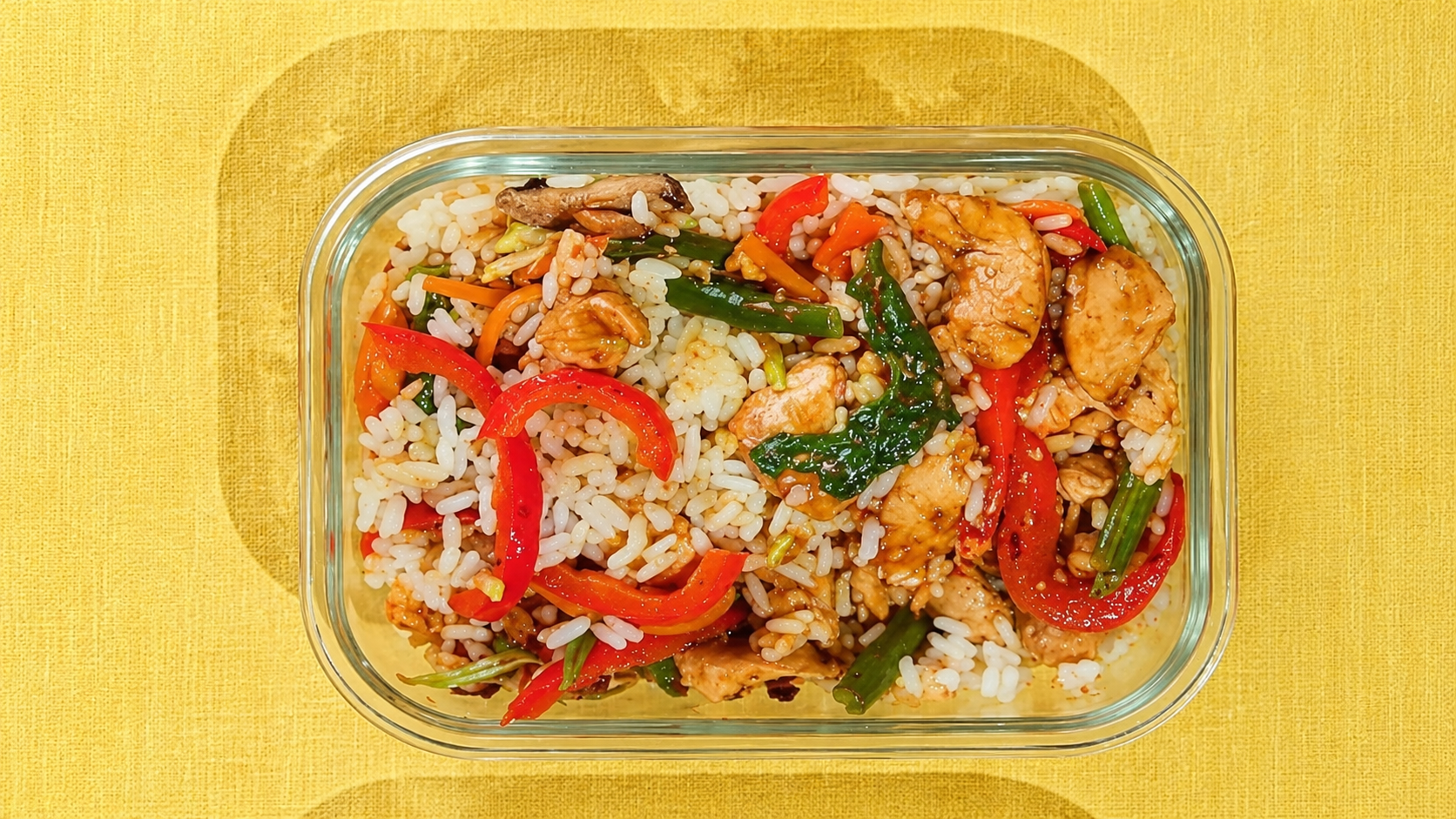
Sweet and Sour Chicken and Peppers with Rice
Ingredients
Method
- Cook the rice in a pot according to the package, or heat a microwave rice pouch.
- Whisk all the sauce ingredients in a small bowl until the cornstarch dissolves.
- Toss the chicken with the cornstarch, salt and pepper. Heat 1 tsp of the oil in a large skillet or wok over high heat and cook the chicken in a single layer for 5–6 minutes, until golden and cooked through. Move it to a plate.
- Add the remaining oil, the peppers and the carrot and stir-fry for 3–4 minutes, until crisp-tender. Add the green onions for the last minute.
- Return the chicken to the pan, pour in the sauce and stir for 1–2 minutes, until it thickens and coats everything. Stir in the spinach, if using, until it wilts.
- Add the cooked rice to the pan and toss everything together for 1 minute, so the rice picks up some of the sauce. Divide between 2 containers.
Notes
Recipe 4: Mediterranean Quinoa Chickpea Salad
The bottom-right container. A cold, plant-forward lunch with cucumber, tomatoes, olives and mint, and a lemon yogurt dressing packed on the side.
Star ingredients: chickpeas and quinoa. Together they give each serving about 15 g of fiber, more than half of the 25–29 g a day linked to the biggest health benefits in The Lancet review [3]. The Greek yogurt dressing adds protein without the calories of a classic oil-heavy vinaigrette.
- Fluffy quinoa: rinse it before cooking to remove its bitter coating and spread it out to cool quickly.
- Need more protein? Add 3 oz of shredded chicken or ½ cup of shelled edamame per serving.
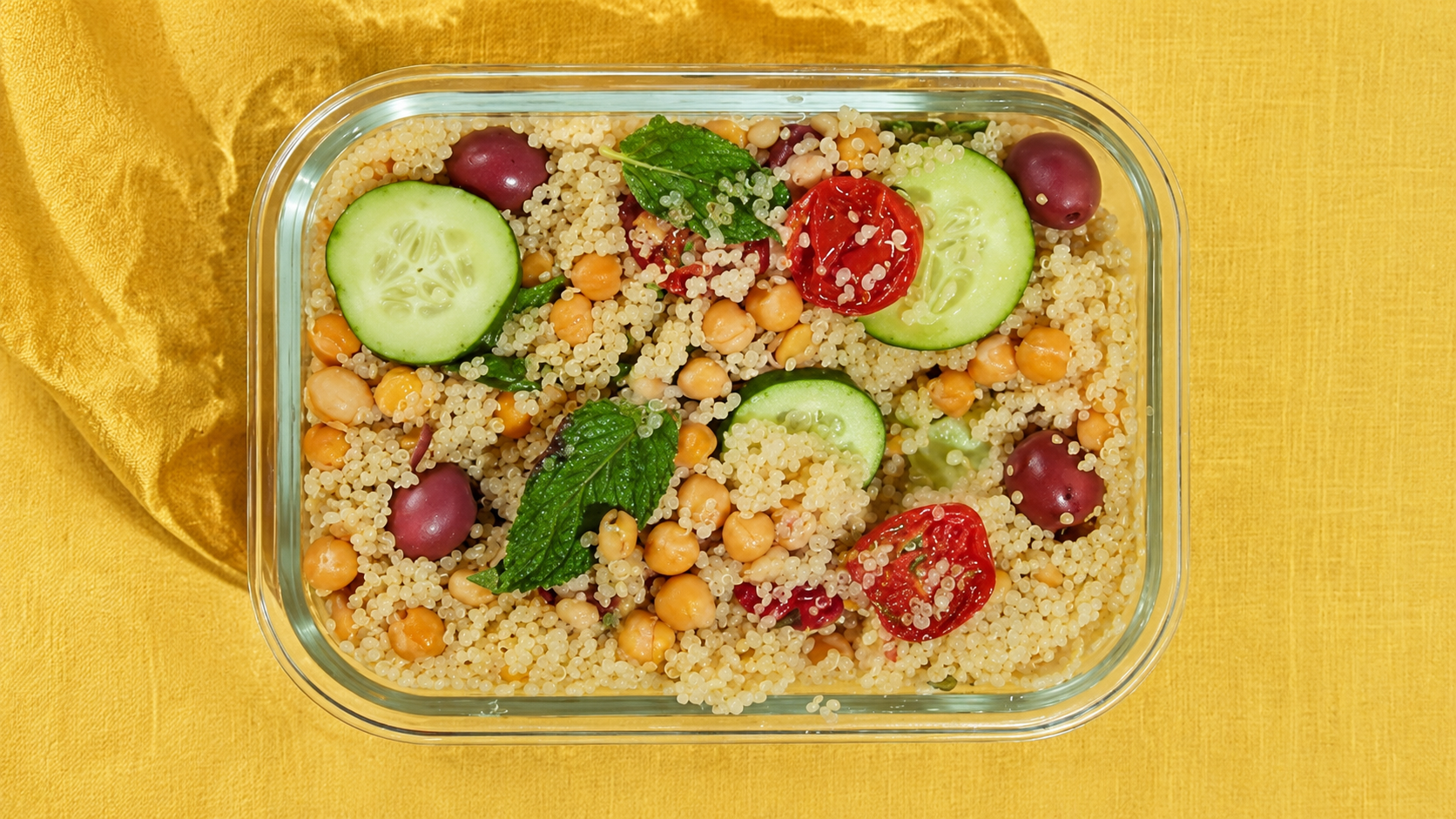
Mediterranean Quinoa Chickpea Salad
Ingredients
Method
- Cook the quinoa in ⅔ cup of water for 15 minutes, until the water is absorbed. Spread it on a plate to cool.
- Whisk the yogurt, lemon juice and zest, olive oil and garlic with a pinch of salt.
- Combine the cooled quinoa, chickpeas, cucumber, tomatoes, olives, red onion, feta and herbs.
- Divide between 2 containers and pack the dressing separately. Toss just before eating.
Notes
Food safety and storage
- Fridge: refrigerate within 2 hours of cooking and eat within 3–4 days [7].
- Freezer: cooked meals keep their best quality for 3–4 months [7]. The stew and the sweet and sour chicken freeze best.
- Reheating: reheat until the food reaches 165°F (74°C) in the center [7]. The quinoa salad is eaten cold.
- Containers: airtight glass containers with locking lids keep food fresher, do not stain and are safe in the microwave. Let food cool slightly before sealing so condensation doesn’t make it soggy.
Frequently asked questions
How much protein is in each meal?
Between 25 g (quinoa chickpea salad) and 46 g (turkey stew) per serving. Use the + and − buttons in each recipe card to see the totals for more servings.
Can I prep these recipes for one person?
Yes. Each recipe makes 2 servings. Tap − in the recipe card and every quantity updates for one serving.
Which of these meals freeze well?
The turkey stew and the sweet and sour chicken with rice (the potatoes in the stew turn slightly softer). Don’t freeze the quinoa salad or the bibimbap vegetables, which turn watery.
Is this meal plan good for weight loss?
All four meals are high in protein and moderate in calories (490–590 kcal), which helps with fullness [1]. How much you need depends on your size, activity and goals. If you have a medical condition, ask your doctor or a registered dietitian.
Want more ideas? See our meal prep lunch boxes, browse the meal prep recipes or read how much protein you need a day.
Sources
- Leidy HJ, Clifton PM, Astrup A, et al. The role of protein in weight loss and maintenance. Am J Clin Nutr. 2015;101(6):1320S–1329S. PubMed
- Morton RW, Murphy KT, McKellar SR, et al. A systematic review, meta-analysis and meta-regression of the effect of protein supplementation on resistance training-induced gains in muscle mass and strength in healthy adults. Br J Sports Med. 2018;52(6):376–384. PubMed
- Reynolds A, Mann J, Cummings J, et al. Carbohydrate quality and human health: a series of systematic reviews and meta-analyses. Lancet. 2019;393(10170):434–445. DOI
- Boirie Y, Dangin M, Gachon P, et al. Slow and fast dietary proteins differently modulate postprandial protein accretion. PNAS. 1997;94(26):14930–14935. DOI
- National Institutes of Health, Office of Dietary Supplements. Vitamin A and Carotenoids – Fact Sheet for Consumers. ods.od.nih.gov
- National Institutes of Health, Office of Dietary Supplements. Iron – Fact Sheet for Consumers. ods.od.nih.gov
- USDA Food Safety and Inspection Service. Leftovers and Food Safety. fsis.usda.gov
- USDA Agricultural Research Service. FoodData Central. fdc.nal.usda.gov
- Gollwitzer PM, Sheeran P. Implementation intentions and goal achievement: a meta-analysis of effects and processes. Adv Exp Soc Psychol. 2006;38:69–119. DOI
- Gärtner C, Stahl W, Sies H. Lycopene is more bioavailable from tomato paste than from fresh tomatoes. Am J Clin Nutr. 1997;66(1):116–122. PubMed
This article is for general information and is not medical advice. Nutrition values are estimates and vary with brands and portion sizes.