
A can of tuna is one of the cheapest, easiest ways to get a full serving of protein: a drained 5-oz can of light tuna in water gives you about 28 g of protein for around 130 calories [1]. The problem is that most people only ever turn it into one thing: a mayo-heavy sandwich that gets boring by the third week.
Here are four different meals built on the same pantry can, each ready in 15 minutes or less and each with 35–40 g of protein per serving: a tomato penne, a rice bowl, a no-cook white bean salad and a Greek yogurt tuna wrap. All four keep well, so you can also cook them ahead for work lunches.
The four meals at a glance
| Meal | Protein | Calories | Time | Protein Score |
|---|---|---|---|---|
| Tuna tomato penne | About 39 g | About 495 kcal | 15 min | B (7.9) |
| Tuna rice bowl | About 35 g | About 430 kcal | 10 min | B (8.1) |
| Tuna and white bean salad | About 39 g | About 380 kcal | 10 min | A (10.3) |
| Greek yogurt tuna wrap | About 40 g | About 405 kcal | 5 min | B (9.9) |
Values are per serving, with one drained can of tuna per person, estimated from USDA FoodData Central [1]. How we calculate our numbers.
Which canned tuna to buy
The label matters more than the brand. Three choices change the protein, the calories and how often you can eat it:
| Choice | What to know | Best for |
|---|---|---|
| Light vs. albacore (white) | Light tuna, usually skipjack, is lower in mercury. The FDA lists canned light tuna as a “Best Choice” and albacore as a “Good Choice” [2]. | Light tuna for everyday meals |
| Water vs. oil | Tuna packed in oil has more calories, even after draining. Water-packed tuna keeps the Protein Score high. | Water for these recipes; oil-packed for a richer salad if you prefer |
| Chunk vs. solid | Solid or “chunk” tuna holds together in large flakes; flaked tuna turns soft quickly. | Chunk for pasta, bowls and salads |
| Regular vs. low-sodium | Canned tuna contains added salt. A low-sodium can lets you season to taste. | Anyone watching their salt intake |
How much is safe? For people who are pregnant or breastfeeding, the FDA recommends 2–3 servings a week from its “Best Choices” list, which includes canned light tuna, or 1 serving a week of albacore. One serving is 4 oz, about one drained can [2]. Children should eat smaller portions. If you eat tuna often, rotate it with other proteins such as chicken, eggs or legumes.
1. Tuna tomato penne
The most “dinner” of the four. Tuna and tomato are a classic pairing in Italian cooking, and the sauce is ready in the time it takes to boil the pasta. Add the tuna at the end and stir gently, so it stays in pieces instead of disappearing into the sauce.
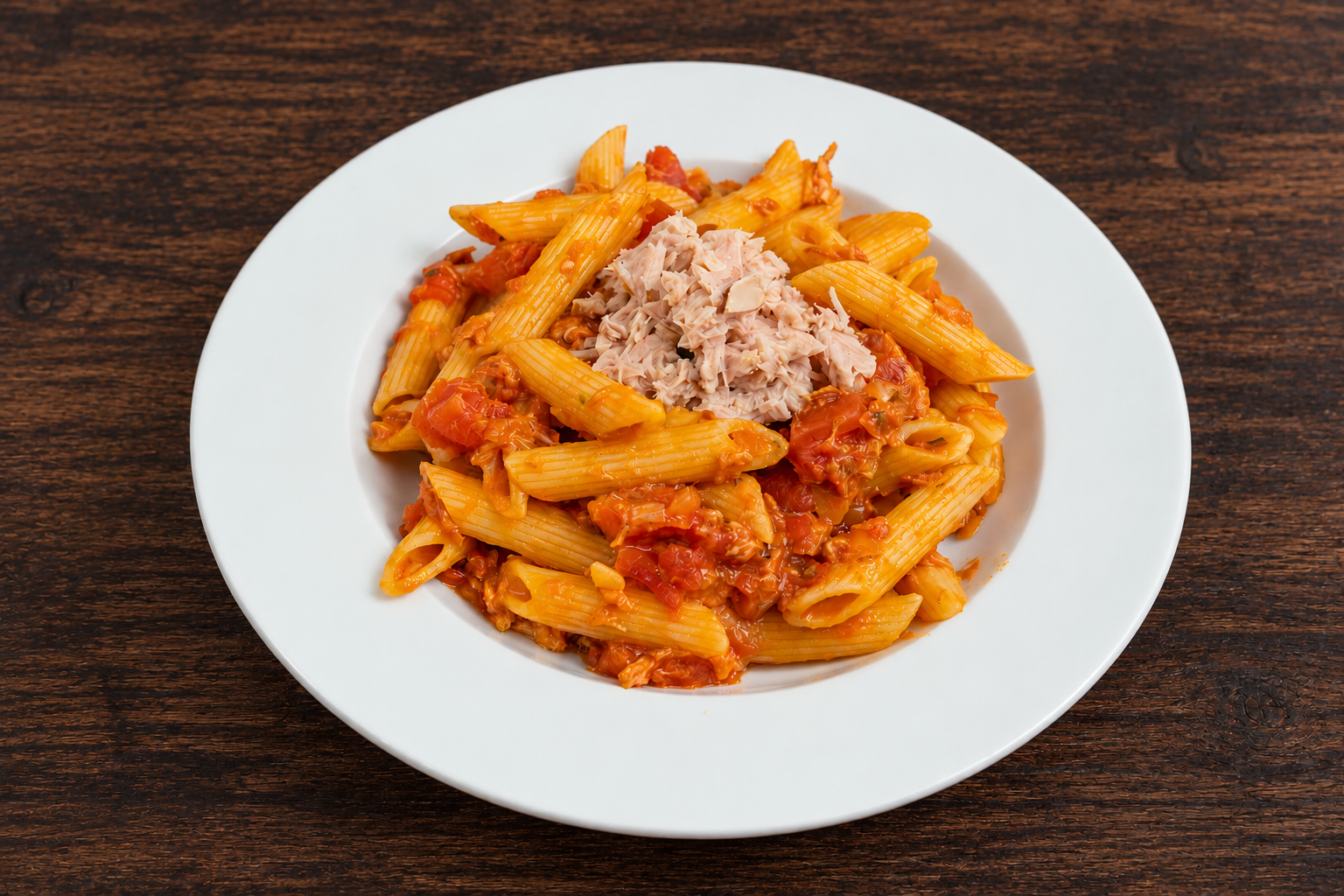
Tuna Tomato Penne
Ingredients
Method
- Cook the penne in salted boiling water according to the package, about 10 minutes. Save ¼ cup of the pasta water before draining.
- While the pasta cooks, warm the olive oil in a skillet over medium heat and cook the garlic for 1 minute, without browning.
- Add the tomato sauce and red pepper flakes and simmer for 5 minutes.
- Stir in the drained tuna in large flakes and heat for 1–2 minutes. Stirring too much breaks it into mush.
- Add the drained penne and a splash of pasta water, toss, season and top with parsley.
Notes
2. Tuna rice bowl with avocado
A poke-style bowl without raw fish. Soy sauce and sesame oil change the flavor of the tuna completely, and the yogurt sriracha drizzle adds creaminess and a little extra protein. Leftover rice works perfectly here. Corn and cucumber are optional: corn adds a touch of sweetness and cucumber some crunch.
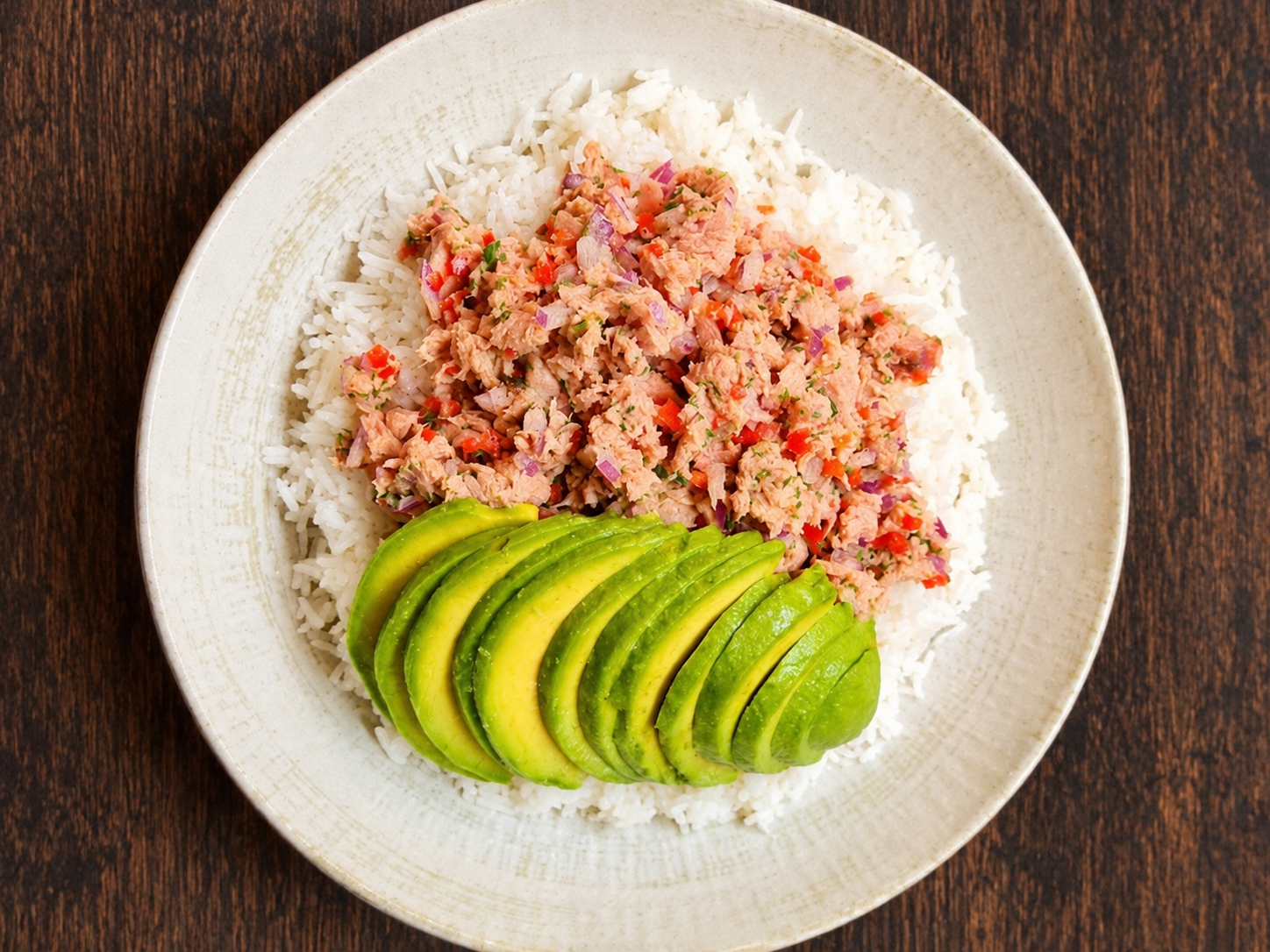
Tuna Rice Bowl with Avocado
Ingredients
Method
- Warm the rice if you like, or use it cold, and add it to a bowl or container.
- Mix the tuna with the soy sauce and sesame oil.
- Arrange the tuna and avocado on top of the rice, add the corn and cucumber if you’re using them, and sprinkle with green onion.
- Stir the yogurt with the sriracha and drizzle it over the bowl just before eating.
Notes
3. Tuna and white bean salad
The highest Protein Score of the four, because the beans add protein and fiber at the same time. It needs no cooking at all, it’s inspired by the Tuscan tonno e fagioli, and it tastes even better after a few hours in the fridge.
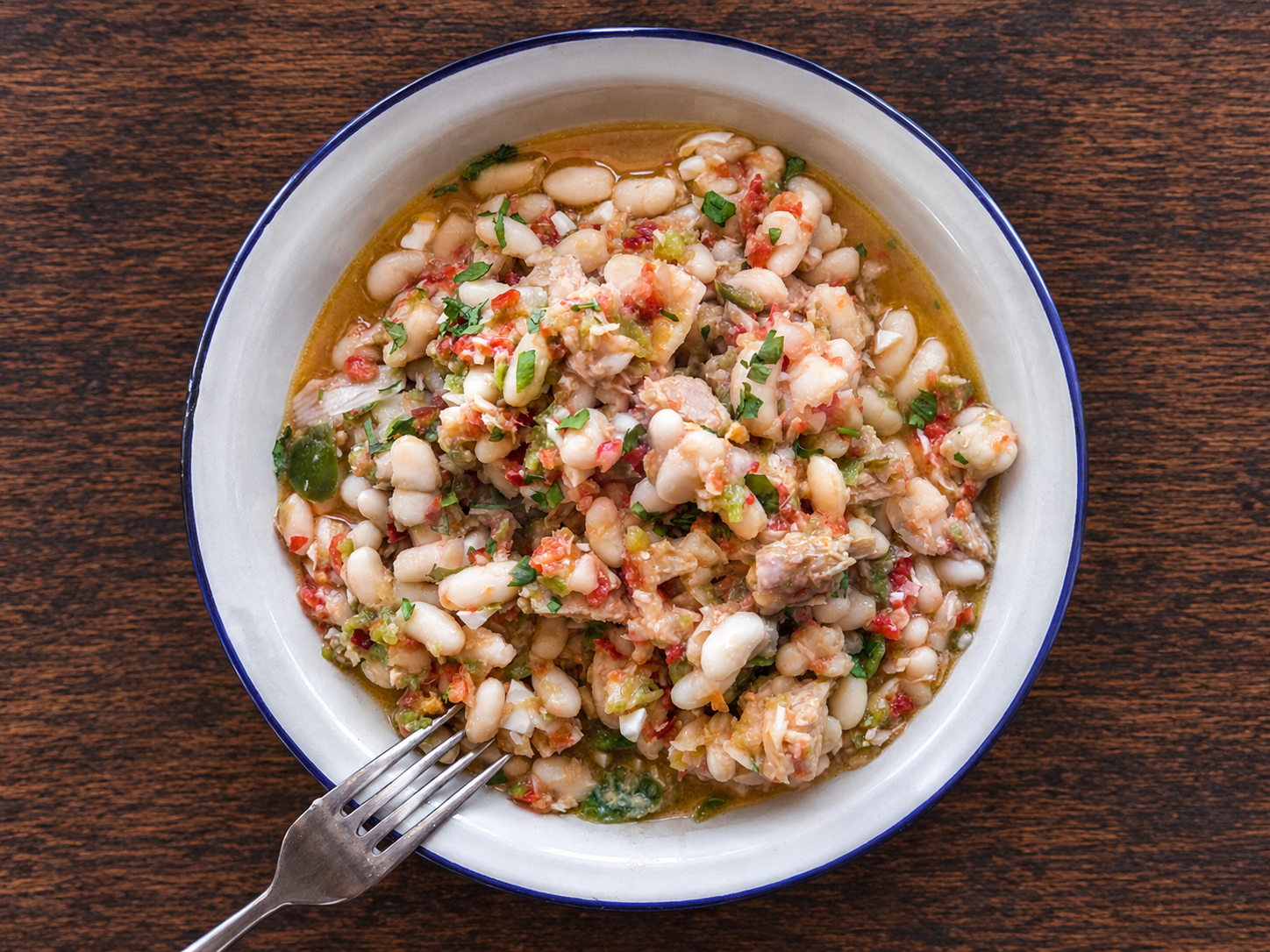
Tuna and White Bean Salad
Ingredients
Method
- Soak the chopped red onion in the lemon juice for 5 minutes. It softens its bite.
- Add the beans, diced tomato and parsley to the bowl.
- Add the tuna in large flakes, drizzle with the olive oil, season and toss gently.
Notes
4. Greek yogurt tuna salad wrap
The closest to a classic tuna sandwich, made lighter. Greek yogurt replaces most of the mayonnaise: it gives the same creamy texture and adds about 4–5 g of protein instead of fat. Dijon mustard and lemon keep it from tasting “healthy”.
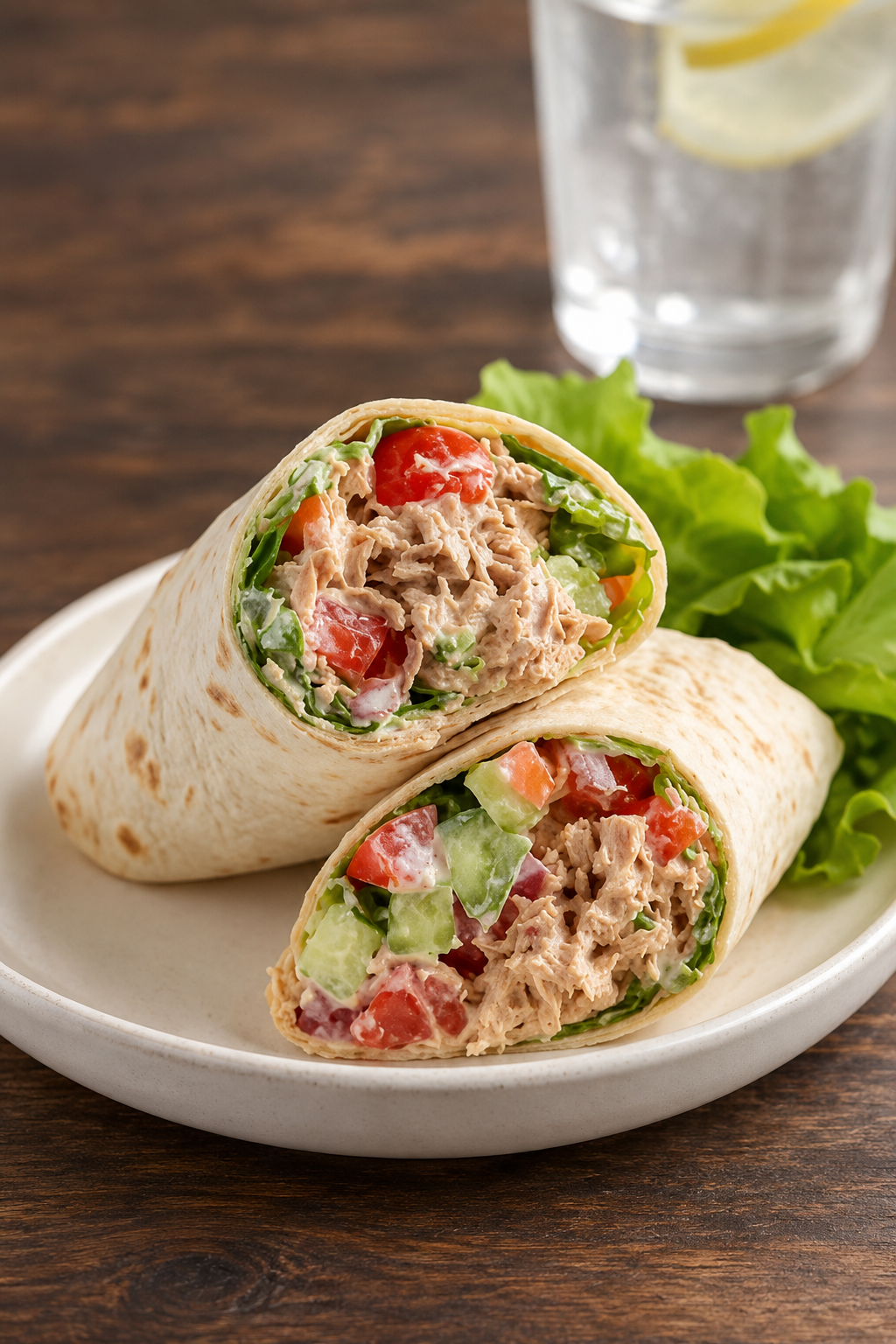
Greek Yogurt Tuna Salad Wrap
Ingredients
Method
- Mix the tuna, yogurt, mustard, lemon juice and celery or pickles. Season to taste.
- Lay the lettuce and tomatoes on the tortilla and spread the tuna salad on top.
- Fold in the sides, roll tightly and cut in half on the diagonal.
Notes
Why the same tuna sandwich gets boring
This is the part I find most interesting as a psychologist. In a classic 1981 study, Barbara Rolls and her colleagues offered people sandwiches with either one filling or four different fillings. When there was variety, they ate about a third more [3]. The researchers explained it with sensory-specific satiety: the pleasure we get from a food drops as we eat it, but the pleasure of a different food stays high.
Within a single meal, that effect can make us overeat. Across a week, it explains something very common: people start a healthy habit like “tuna for lunch every day” and drop it after a few weeks, not because it stopped working, but because it stopped being appealing. Rotating different flavors and textures, like the four meals above, keeps the same cheap ingredient interesting. Serve one meal at a time, though, rather than all four on one plate.
A little canned tuna history
Canned tuna is younger than you might think. Albert Halfhill’s California Fish Company, which opened Southern California’s first sardine cannery in 1893, began canning tuna in 1903 on Terminal Island, near Los Angeles. It was sold as a cheaper alternative to chicken [4]. More than a century later, that’s still exactly why it’s on this list.
Meal prep and storage
- Fridge: cooked dishes and salads keep 3–4 days in airtight containers, the USDA guideline for leftovers [5].
- Opened cans: never store leftover tuna in the open can. Move it to a glass or plastic container with a lid.
- Keep some parts separate: avocado, the yogurt sauce and the tortilla are best added the day you eat them.
- Freezing: the penne freezes well for up to 2 months. The salad, the bowl and the tuna salad filling don’t, because the vegetables and yogurt turn watery.
Planning a full week? See our meal prep lunch boxes and the budget protein recipes.
How much does it cost?
Prices change by store and region, but canned light tuna is usually one of the cheapest sources of protein at U.S. supermarkets, along with eggs, beans and lentils. With store-brand ingredients, each of these meals typically costs about $2–3 per serving, less than most takeout lunches. Buying tuna in multipacks is usually cheaper per can.
Frequently asked questions
Can I eat canned tuna every day?
The FDA’s specific servings advice is for people who are pregnant or breastfeeding and for children: follow the amounts above [2]. For other adults, light tuna is one of the lower-mercury options, but rotating it with other proteins during the week is still the safer habit.
Is canned tuna as healthy as fresh tuna?
It’s a very good source of protein with very little fat. Canning doesn’t remove much protein, but it does add salt, so choose low-sodium cans if you eat it often.
Do I need to cook canned tuna?
No. Canned tuna is already cooked during the canning process, which is why the salad and the wrap need no heat at all.
Can I use canned salmon instead?
Yes, in all four recipes. Canned salmon has a little less protein per ounce and more fat, including more omega-3s.
Sources
- USDA Agricultural Research Service. FoodData Central: Fish, tuna, light, canned in water, drained solids (FDC 171986). fdc.nal.usda.gov
- U.S. Food and Drug Administration. Advice about Eating Fish. fda.gov
- Rolls BJ, Rowe EA, Rolls ET, Kingston B, Megson A, Gunary R. Variety in a meal enhances food intake in man. Physiol Behav. 1981;26(2):215–221. doi.org
- The Log. Southern California Fish Co.: San Pedro’s first cannery. thelog.com
- USDA Food Safety and Inspection Service. Leftovers and Food Safety. fsis.usda.gov
This article is for general information and is not medical advice. Nutrition values are estimates and vary with the brands and portions you use.