
Here’s a dilemma I think many of us know well. You want a brownie. You could make a “fitness” version with no sugar, no butter and a strange texture, and end up eating three of them because none of them hit the spot. Or you could give yourself permission and have the real thing: dark, fudgy and full of chocolate.
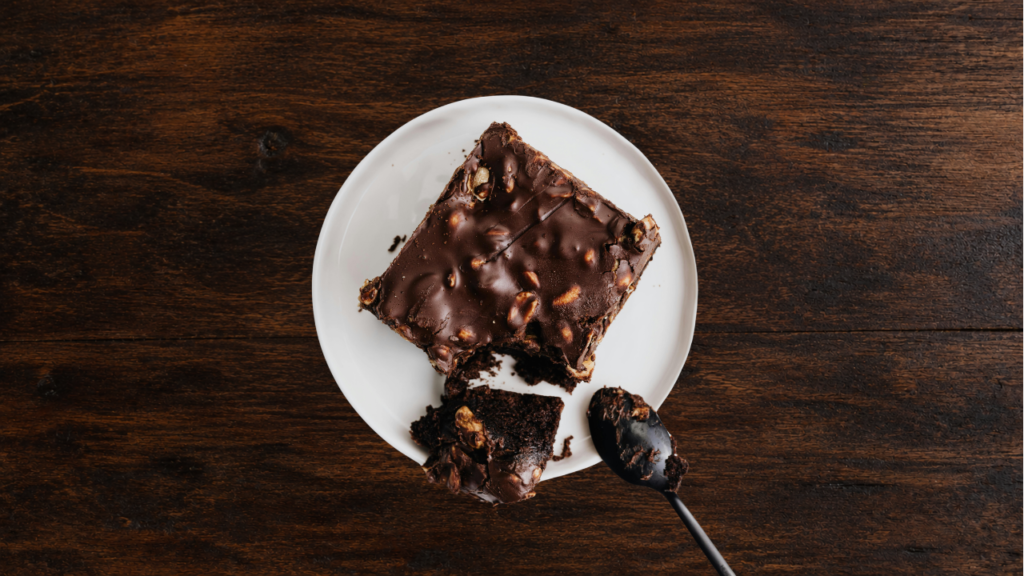
This recipe sits in between, and I think that’s where it belongs. It’s a real brownie, made with 70% dark chocolate, cocoa, roasted peanuts and a chocolate top layer, but Greek yogurt and protein powder give each square about 13 g of protein, four times more than a classic brownie with the same calories. And the sugar is up to you: I’ll show you exactly what changes when you use more, less or none.
| Protein | Calories | Sugar | Time | Makes |
|---|---|---|---|---|
| About 13 g per square | About 250 kcal | About 11 g per square (recipe amount) | 15 min + 20 min baking | 9 squares |
Nutrition is estimated from USDA FoodData Central [1] and varies with the chocolate and protein powder you use.
Same calories, different brownie
Two desserts can have almost the same calories and still do very different things for you. Here’s a classic homemade brownie next to this one, for the same 250 calories:
| Per 250 kcal | Classic brownie | This protein brownie |
|---|---|---|
| Protein | About 3 g | About 13 g |
| Fat | About 16 g | About 14 g |
| Carbohydrates | About 27 g | About 21 g |
| Fiber | Very little | About 4 g |
The classic numbers come from USDA data for brownies prepared from a recipe (466 kcal and 6.2 g protein per 100 g) [1]. The difference comes from swapping part of the butter and flour for Greek yogurt and protein powder, and from using cocoa and dark chocolate, which bring fiber. Protein and fiber make a dessert more satisfying, so one square is more likely to feel like enough.
An honest note: this is still a dessert. Its Protein Score is C (about 5 g of protein per 100 kcal), because chocolate and peanuts are rich in fat. It’s a better brownie, not a protein bar. How we calculate our numbers.
Why guilt doesn’t help you eat better
This is the part of the dilemma I care about most as a psychologist. In a classic experiment, people who were dieting and people who weren’t were asked to drink a milkshake before a so-called ice cream taste test. Non-dieters ate less ice cream after the milkshake, as you’d expect. Dieters ate more. Once they felt they had “broken” their diet, they let go completely [2]. Researchers later nicknamed this the “what-the-hell effect.”
Guilt seems to work the same way. In a study from New Zealand, about 300 adults were asked what they associate with chocolate cake: guilt or celebration. People who chose guilt didn’t have healthier attitudes or stronger intentions to eat well. Instead, they felt less in control of their eating, and over 18 months they were less likely to maintain their weight [3].
So my answer to the dilemma is this: if you want a brownie, have a brownie you actually enjoy, sit down and eat it without guilt. A version you don’t like often leads to “well, that didn’t count” and a second dessert. A version you love, with some protein, usually ends the craving. This recipe is designed to taste like a real brownie first.
Choose your sugar
The recipe uses ⅓ cup of brown sugar, which I find balanced with 70% dark chocolate. Adjust it to your taste:
| Option | Taste and texture | Per square |
|---|---|---|
| ½ cup brown sugar | Sweetest, fudgiest, closest to a bakery brownie | About 265 kcal, 15 g sugar |
| ⅓ cup brown sugar (recipe) | Rich and chocolatey, not too sweet | About 250 kcal, 11 g sugar |
| ⅓ cup 1:1 sugar substitute (like an allulose or erythritol blend) | Less sweet aftertaste with allulose; a bit more cake-like | About 220 kcal, 4 g sugar |
Most of the sugar left in the substitute version comes from the chocolate itself. If you’re new to sugar substitutes, start with one square: sugar alcohols like erythritol can cause bloating in some people.
Protein brownie recipe
Protein Brownies with Dark Chocolate and Peanuts
Ingredients
Method
- Preheat the oven to 350°F (175°C) and line an 8×8-inch pan with parchment paper.
- Melt 2 oz of the dark chocolate with the butter in the microwave in 20-second bursts, stirring between each, until smooth. Let it cool for a few minutes.
- In a large bowl, whisk the eggs, Greek yogurt, brown sugar and vanilla. Stir in the melted chocolate.
- Add the cocoa powder, protein powder, oat flour, baking powder and salt and fold until just combined. The batter will be thick. Fold in the chopped peanuts.
- Spread the batter in the pan and bake for 18–22 minutes, until the edges are set and a toothpick in the center comes out with moist crumbs. Don’t overbake.
- Let the brownies cool completely in the pan.
- Melt the remaining 2 oz of dark chocolate, spread it over the brownies and scatter the peanuts on top. Refrigerate for 20 minutes to set, then cut into 9 squares.
Notes
Tips for fudgy, not dry, protein brownies
- Don’t overbake. Protein powder dries out quickly. Take the brownies out when a toothpick comes out with moist crumbs, not clean.
- Use a whey-casein blend if you can. Blends tend to bake softer than pure whey. Plant protein works too, but it absorbs more liquid, so add 1–2 tablespoons of milk.
- Let them cool completely. Brownies keep setting as they cool. Cutting them warm makes them look underbaked.
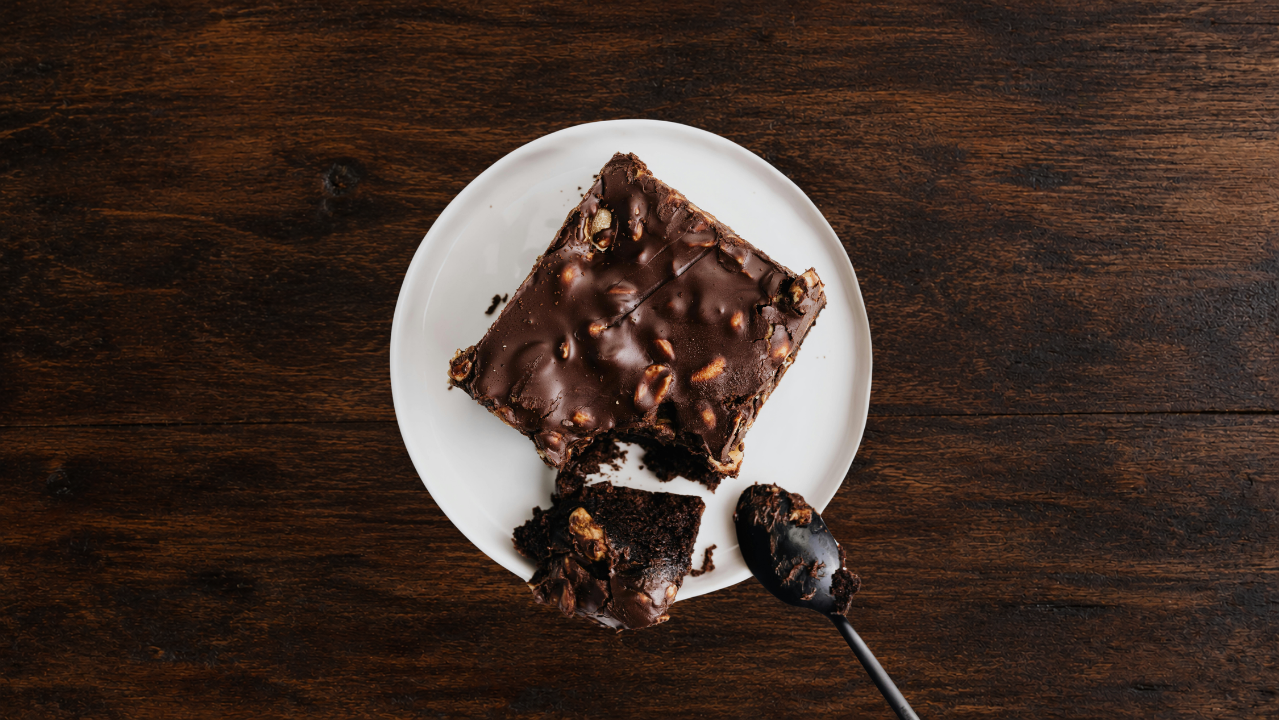
- Chill the top. 20 minutes in the fridge sets the chocolate layer so you get clean squares like in the photo.
- Use good chocolate. With less sugar and butter, the chocolate does most of the work. A 70% bar you like eating on its own makes the biggest difference.
Cocoa and your gut bacteria
Cocoa is rich in flavanols, plant compounds that are poorly absorbed in the small intestine and reach the colon, where gut bacteria break them down.
In a 4-week study with healthy adults, a drink with a high dose of cocoa flavanols increased beneficial gut bacteria such as bifidobacteria and lactobacilli compared with a low-flavanol drink [4]. Two honest caveats: the study was small and funded by a chocolate company, and the drink had far more flavanols than a brownie. Still, it’s one more reason to choose dark chocolate and natural cocoa over milk chocolate.
Fun fact: peanuts aren’t nuts. They’re legumes that grow underground, which is why they bring more protein than most tree nuts. Swap them for walnuts or hazelnuts if you prefer: the brownie will have about 1 g less protein per square.
Variations
| Version | What to change |
|---|---|
| Peanut butter swirl | Drop 3 tbsp peanut butter on the batter and swirl with a knife before baking. |
| Hazelnut | Use toasted hazelnuts instead of peanuts for a Nutella-style brownie. |
| Espresso | Add 1 tsp instant espresso powder to deepen the chocolate flavor. |
| Gluten-free | Use certified gluten-free oat flour. |
| Mint chocolate | Add ½ tsp peppermint extract and skip the peanuts. |
Storage
- Fridge: keep them covered for up to 5 days. Because they contain Greek yogurt, the fridge is the safest place.
- Freezer: wrap squares individually and freeze for up to 3 months. Thaw in the fridge or for 20 minutes at room temperature.
- Serve: they taste fudgiest at room temperature, or warmed for 10 seconds in the microwave.
Frequently asked questions
Do protein brownies taste like regular brownies?
Close, if you use real dark chocolate and don’t overbake them. The texture is slightly less dense than a butter-heavy brownie, but the flavor is rich and chocolatey.
Can I make them without protein powder?
Yes. Replace the protein powder with ¼ cup more flour and an extra 2 tbsp of cocoa. You’ll get about 8 g of protein per square, mostly from the eggs, yogurt and peanuts.
Can I use regular flour?
Yes, all-purpose flour works in the same amount as oat flour.
Is it okay to eat a brownie when I’m trying to lose weight?
A brownie that fits into your day and that you enjoy without guilt is usually better for long-term habits than strict rules that end in overeating. If you have a medical condition or a history of difficult eating patterns, talk to a professional about what works for you.
What other high-protein desserts can I make?
Try my protein cheesecake with fruit toppings or my cottage cheese ice cream.
Sources
- USDA Agricultural Research Service. FoodData Central (including SR Legacy 174949, brownies prepared from recipe). fdc.nal.usda.gov
- Herman CP, Mack D. Restrained and unrestrained eating. J Pers. 1975;43(4):647–660. SSIB Ingestive Classics
- Kuijer RG, Boyce JA. Chocolate cake. Guilt or celebration? Associations with healthy eating attitudes, perceived behavioural control, intentions and weight-loss. Appetite. 2014;74:48–54. PubMed
- Tzounis X, Rodriguez-Mateos A, Vulevic J, et al. Prebiotic evaluation of cocoa-derived flavanols in healthy humans by using a randomized, controlled, double-blind, crossover intervention study. Am J Clin Nutr. 2011;93(1):62–72. PubMed
This article is for general information and is not medical advice. Nutrition values are estimates and vary with the brands you use.