
This protein oatmeal comes in two versions. For the most protein, make a protein bowl with a scoop of protein powder, oats and milk. Without powder, use Greek yogurt, oats and warm spices. Both are ready in under 10 minutes and are filling enough to carry you through the morning.
Hot or cold? This recipe is a warm bowl of oatmeal you cook in about 5 minutes, perfect for cold mornings or when you want something cozy. If you’d rather prepare breakfast the night before and eat it cold, straight from the fridge, try my high-protein overnight oats (36 g protein, 5-minute prep).
Every ingredient is measured below, so the nutrition numbers are accurate. Pick the version that fits your morning.
| Version | Protein | Calories | Protein Score | Time |
|---|---|---|---|---|
| With protein powder | 41 g | 575 | B (7.1 g per 100 kcal) | 7 min |
| With Greek yogurt (no powder) | 25 g | 410 | C (6.1 g) | 7 min |
Calories include the toppings. Without the peanut butter and granola, both bowls are lighter and score higher.
Why oats are a smart high-protein base
Oats are one of the few everyday foods rich in beta-glucan, a soluble fiber. A meta-analysis of 28 randomized trials found that eating at least 3 g of oat beta-glucan a day lowered LDL (“bad”) cholesterol by about 0.25 mmol/L [1]. The FDA allows a health claim that 3 g or more a day of beta-glucan from oats, as part of a diet low in saturated fat and cholesterol, may reduce the risk of heart disease [2]. Half a cup of rolled oats provides roughly half of that amount.
Adding protein makes the bowl more filling. Higher-protein meals increase feelings of fullness in controlled studies [3], and plain oatmeal on its own has only about 5 g of protein per serving [5].
Option 1: Protein oatmeal with protein powder
Version 1 is a protein bowl: oats cooked in milk with a scoop of protein powder stirred in at the end. Topped with banana, blueberries, peanut butter, chia and flaxseed, it reaches about 41 g of protein.
- The key trick: add the protein powder off the heat and after a minute of cooling. If the oats are boiling hot, the powder clumps.
- Too thick? Protein powder absorbs liquid, so add a splash of milk after stirring it in.
- Chocolate version: use chocolate protein powder and top with banana, a drizzle of nut butter and a square of dark chocolate.
- Even more protein: cook the oats in a high-protein or ultra-filtered milk.
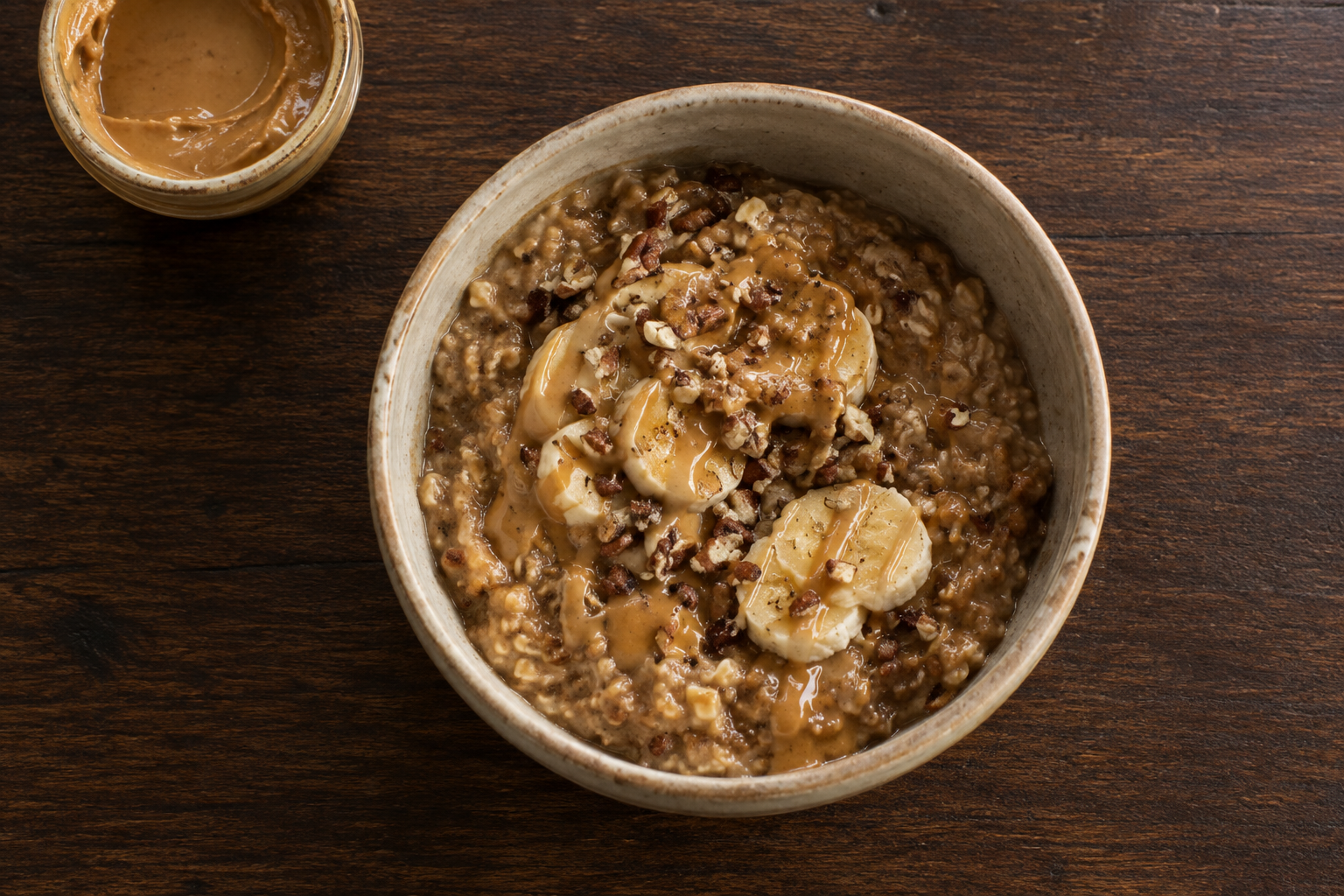
Protein Oatmeal with Protein Powder
Ingredients
Method
- Add the oats, milk and a pinch of salt to a small pot (or a large microwave-safe bowl).
- Cook over medium heat for 4–5 minutes, stirring often, until thick and creamy. In the microwave, cook for 2–3 minutes, stirring every minute.
- Take it off the heat and let it cool for 1 minute.
- Stir in the protein powder until smooth. Add a splash of milk if it gets too thick.
- Top with banana, blueberries, peanut butter, chia seeds and flaxseed.
Notes
Option 2: Greek yogurt protein oatmeal (no protein powder)
The second version skips the powder completely. The protein comes from Greek yogurt, and the flavor comes from warm spices like cinnamon, nutmeg and vanilla. It is creamier, a little tangy and reaches about 25 g of protein.
Plain nonfat Greek yogurt has about 10 g of protein per 100 g, roughly twice as much as regular plain yogurt, because much of the liquid whey is strained out [5]. Three-quarters of a cup adds about 17 g of protein to your oatmeal without any powder.
- Keep it smooth: stir in the yogurt after taking the oats off the heat, so it stays creamy instead of splitting.
- Spice it up: cinnamon, nutmeg and cardamom add natural sweetness, so you need less honey.
- More protein: cook the oats in milk instead of water for about 6 g more.
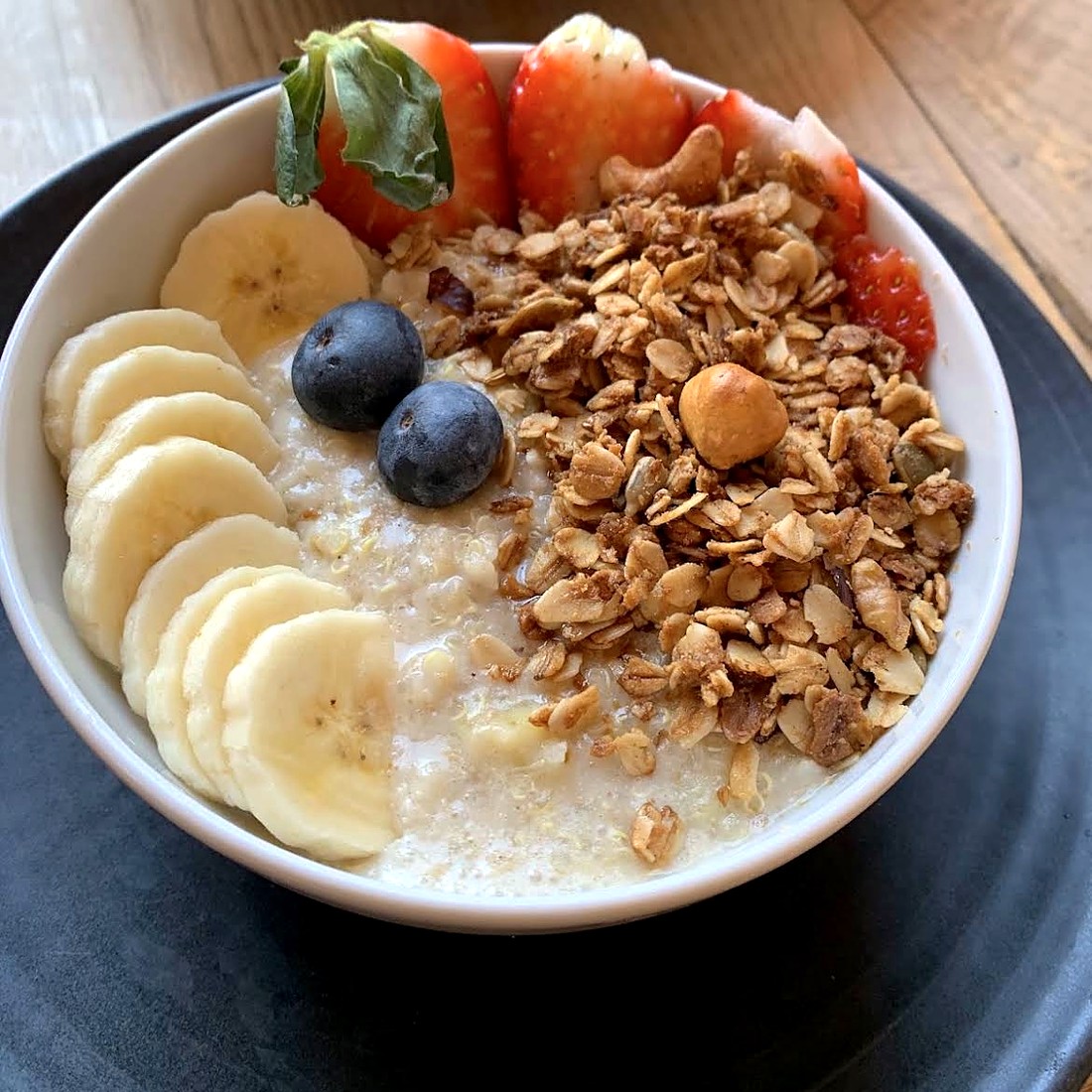
Greek Yogurt Protein Oatmeal (No Protein Powder)
Ingredients
Method
- Add the oats, water, cinnamon and nutmeg to a small pot (or a microwave-safe bowl).
- Cook for 4–5 minutes on the stove, or 2–3 minutes in the microwave, until the oats are soft.
- Take it off the heat, stir in the vanilla and let it cool for 1–2 minutes.
- Stir in the Greek yogurt and honey until creamy. Adding the yogurt off the heat keeps it smooth.
- Top with banana, strawberries and granola.
Notes
Topping ideas
Both recipes are a base, so you can top them however you like. A classic combination is the one in the photo: sliced banana, chopped nuts and a spoonful of peanut butter. The banana adds natural sweetness, while the nuts add healthy fats and a little crunch. Blueberries with peanut butter, or berries with granola, work just as well. Here are some toppings to mix and match:
| Topping | Protein added | Why it works |
|---|---|---|
| 1 tbsp peanut butter | about 3.5 g | Creamy and very filling |
| 1 tsp chia seeds | about 0.7 g | Adds fiber and texture |
| 2 tbsp granola | about 1.5 g | Crunch |
| ¼ cup cottage cheese | about 6 g | Extra protein with no powder |
| Berries or banana | under 1 g | Natural sweetness |
| 1 tbsp ground flaxseed | about 1.3 g | Fiber and plant omega-3 fats |
| 1 tsp honey | 0 g | A little sweetness; drizzle it on top so a small amount goes a long way |
Common mistakes (and how to avoid them)
- Boiling the protein powder. Whey cooked in hot oats can turn rubbery or lumpy. Take the pot off the heat, let it cool for a minute and stir the powder in with a splash of milk.
- Too much powder. More than one scoop per ½ cup of oats makes the bowl chalky and thick. For more protein, add Greek yogurt or egg whites instead.
- Instant oats. They cook fast but turn gluey. Old-fashioned rolled oats keep their texture.
- Cooking the Greek yogurt. Yogurt can curdle when it boils. Stir it in at the end, off the heat.
- Skipping the salt. A tiny pinch makes oats taste sweeter and less flat, so you need less sugar on top.
Oats and your gut microbiota
With my training in microbiota and digestive health, this is the part of oats I find most interesting. The beta-glucan in oats isn’t digested in the small intestine. It reaches the colon, where gut bacteria ferment it into short-chain fatty acids such as acetate, propionate and butyrate, compounds that help feed the cells of the gut lining.
A 2023 review in Nutrients found that oats were linked to increases in beneficial bacteria such as Bifidobacterium and Lactobacillus, and to more short-chain fatty acids, in several studies [6]. Two honest caveats: most of that evidence comes from animal and lab studies rather than people, and the review was partly funded by a food company that sells oats. Still, a daily bowl of oats is one of the easiest ways to give your gut bacteria more fiber to work with.
Frequently asked questions
Can you put protein powder in oatmeal?
Yes. Stir it in once the oats are cooked and slightly cooled, and add a splash of milk if it gets too thick. Adding it while the oats are boiling makes it clump.
How do you add protein to oatmeal without protein powder?
Use Greek yogurt, cottage cheese, high-protein milk or egg whites. Greek yogurt is the easiest: ¾ cup adds about 17 g of protein.
Can I make it ahead?
Yes. Cook the oats, let them cool and keep them in the fridge for up to 3–4 days [4]. Reheat with a splash of milk, then stir in the protein powder or yogurt and add the toppings.
Is protein oatmeal good for weight loss?
It can help because protein and fiber both increase fullness [3]. Watch the calorie-dense toppings like nut butter and granola if you are counting calories.
Want a high-protein drink for the afternoon too? Try my iced protein coffee or plan your week with this high-protein meal prep.
Sources
- Whitehead A, Beck EJ, Tosh S, Wolever TMS. Cholesterol-lowering effects of oat β-glucan: a meta-analysis of randomized controlled trials. Am J Clin Nutr. 2014;100(6):1413–1421. Lancaster University repository
- U.S. Food and Drug Administration. 21 CFR 101.81 – Health claims: soluble fiber from certain foods and risk of coronary heart disease. ecfr.gov
- Leidy HJ, Clifton PM, Astrup A, et al. The role of protein in weight loss and maintenance. Am J Clin Nutr. 2015;101(6):1320S–1329S. PubMed
- USDA Food Safety and Inspection Service. Leftovers and Food Safety. fsis.usda.gov
- USDA Agricultural Research Service. FoodData Central. fdc.nal.usda.gov
- Fabiano GA, Shinn LM, Antunes AEC. Relationship between oat consumption, gut microbiota modulation, and short-chain fatty acid synthesis: an integrative review. Nutrients. 2023;15(16):3534. PMC
This article is for general information and is not medical advice. Nutrition values are estimates and vary with the brands and toppings you use.